
Best Boho Wedding Venues in New Mexico: Booking Guide
You've saved the photograph: adobe walls in late sunlight, timber overhead, mountains beyond the ceremony chairs. Then someone asks where your grandparents will stay, who's driving back after dinner, and whether the barn is available on your Saturday. Those questions should shape your shortlist just as much as the view.
The best boho wedding venues in New Mexico offer more than a beautiful ceremony backdrop. They make the whole gathering workable, from airport arrival to the walk back to a cabin after dark. A thoughtful choice balances regional character with travel, lodging, accessibility, weather protection, and clear booking terms.
Table of Contents
- Boho Venue Settings Worth Shortlisting in New Mexico
- Guest Travel and Location Choices That Decide Attendance
- Check Saturday Availability and Confirm It in Writing
- Timing the Ceremony Around Travel and the Marriage License
- Backup Plans for Weather and Open Flame
- Lighting the Evening Under a Dark Sky
Boho Venue Settings Worth Shortlisting in New Mexico
Boho venue settings and what to confirm for a Saturday
| Setting | Boho look it suits | What to confirm for a Saturday |
|---|---|---|
| Working farm with barn | Timber beams, gardens and open fields | Whether your chosen Saturday is open for ceremony and reception hours |
| Historic adobe or cabin property | Adobe walls, low roofs and cabin stays | Which accommodations are available for your dates |
| Public outdoor ceremony site | Desert and mountain backdrop with no shelter | Special Use Permit, two-hour window and application at least one month ahead |
Adobe warmed by late sun, weathered timber and mountain light give a celebration character before flowers arrive. Each setting calls for a different booking conversation: a farm, a historic lodging property and a public ceremony site have different limits and logistics.
A farm setting with room to gather
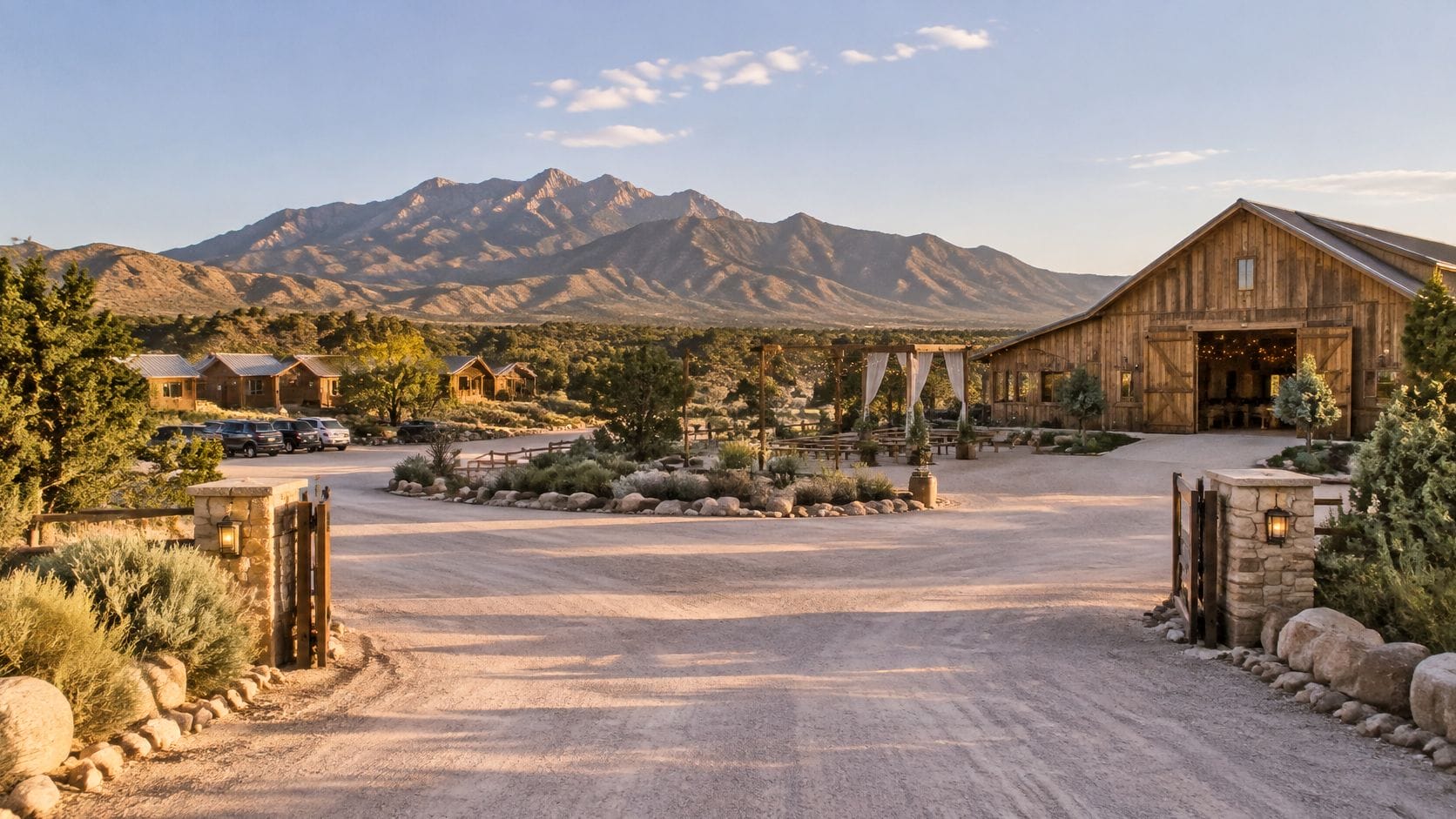
Taos Goji is a 40-acre retreat center and working organic farm in San Cristobal, with gardens, orchards and fields in a mountain setting. Its Rustic Farm & Barn wedding packages offer couples a farm-based option, and weddings range from intimate elopements to weekend-long celebrations.
Ask what the Saturday booking includes, which spaces are available, and how the event schedule fits the agreement. Taos Goji welcomes wedding inquiries alongside inquiries about retreats, events and stays. Donkey, alpacas and goats graze near the historic cabins, so clarify guest and vendor arrangements for the spaces you plan to use.
Historic stays and public landscapes
Compare accommodation types and sleeping arrangements before choosing a property. Taos Goji's historic cabins and casitas are named after artists and writers who once stayed there. The property is 11 miles north of Taos and combines lodging with gathering spaces, though the amount of on-site accommodation available for a particular Saturday needs to be confirmed.
Public outdoor settings require a separate check. Bandelier National Monument's wedding sites are rustic outdoor locations without weather shelter. Its stated ceremony requirements include designated sites, a Special Use Permit, a two-hour block, an application at least one month ahead, and a $100 non-refundable application fee. Confirm the current requirements with the monument before committing.
Shortlist test: Choose the setting that fits your preferred atmosphere, then compare its Saturday booking terms and lodging availability.
A protected natural area may suit a ceremony while requiring a separate reception location. A farm with lodging may keep more of the gathering in one place.
Guest Travel and Location Choices That Decide Attendance
A barn photograph can't tell you whether your guests can attend comfortably. Start with travel cost, lodging, and physical access, then decide which setting deserves a site visit.
In Zola's 2025 First Look Report, 32% of couples planned destination weddings, and 79% of those couples expected smaller gifts because guests were already paying for travel and lodging. That's a useful reminder to treat the invitation as a financial commitment for guests, not just a calendar request.
A mountain backdrop is part of the appeal, but the arrival plan needs equal attention.
Map the whole journey
Taos Goji is 11 miles north of Taos, in San Cristobal, not in Santa Fe or Albuquerque. For guests flying into either city, the onward drive belongs in the invitation planning, not in a last-minute message.
Use Google Maps or another routing tool to compare the actual arrival airport, rental-car collection, onward drive, and property entrance. Test routes against likely arrival times, and don't publish a drive time based on an empty-road estimate. Guests coming from neighboring Southwestern states need the same attention to their final approach.
For a group already considering private aviation, Approved Jets' 2026 guide to chartering for groups can help frame the questions to ask. Treat charter travel as an optional comparison, not an assumed solution to affordability, and establish ground transportation separately.
Check the guest who needs the most support
We offer historic cabins and casitas for stays, which can reduce transfers between lodging and the celebration. That doesn't establish how many of your guests can stay onsite or which accommodation suits a particular mobility need.
Before choosing a rural venue, work through these checks:
- Sleeping arrangements: Match households to actual beds, bathrooms, and room configurations rather than a headline lodging capacity.
- Walking routes: Identify stairs, gravel, uneven ground, restroom access, and the distance between each gathering space.
- Transportation: Decide who needs an airport transfer, who can drive, and who needs a ride after the reception.
- Disrupted arrivals: Give travelers a contact and an alternative plan if weather or road conditions change.
- Total guest cost: Include lodging, transport, meals outside the wedding, and time away from work.
Our destination wedding venue guide can help you compare the broader setting choices. For the final decision, use your own guest list rather than an imaginary average traveler.
Will your least mobile or least affluent guest be able to attend without an exhausting journey or an uncomfortable expense?
A smaller invitation list isn't automatically easier. A rural celebration works when the people you invite understand the journey and have realistic options for making it.
Check Saturday Availability and Confirm It in Writing
An available date isn't yet a usable booking. You need the right spaces, sufficient access hours, compatible lodging, and terms you understand before guests commit to travel.
For couples who want a longer planning runway, Get Spliced's recommendation to start planning twelve months before offers a useful organizational starting point, not a rule about any venue's availability. Begin with the decisions that affect everyone else: dates, travel, accommodation, and the scope of the event.
Start your date search with a travel calendar beside the venue calendar.
Build an inquiry that gets comparable answers
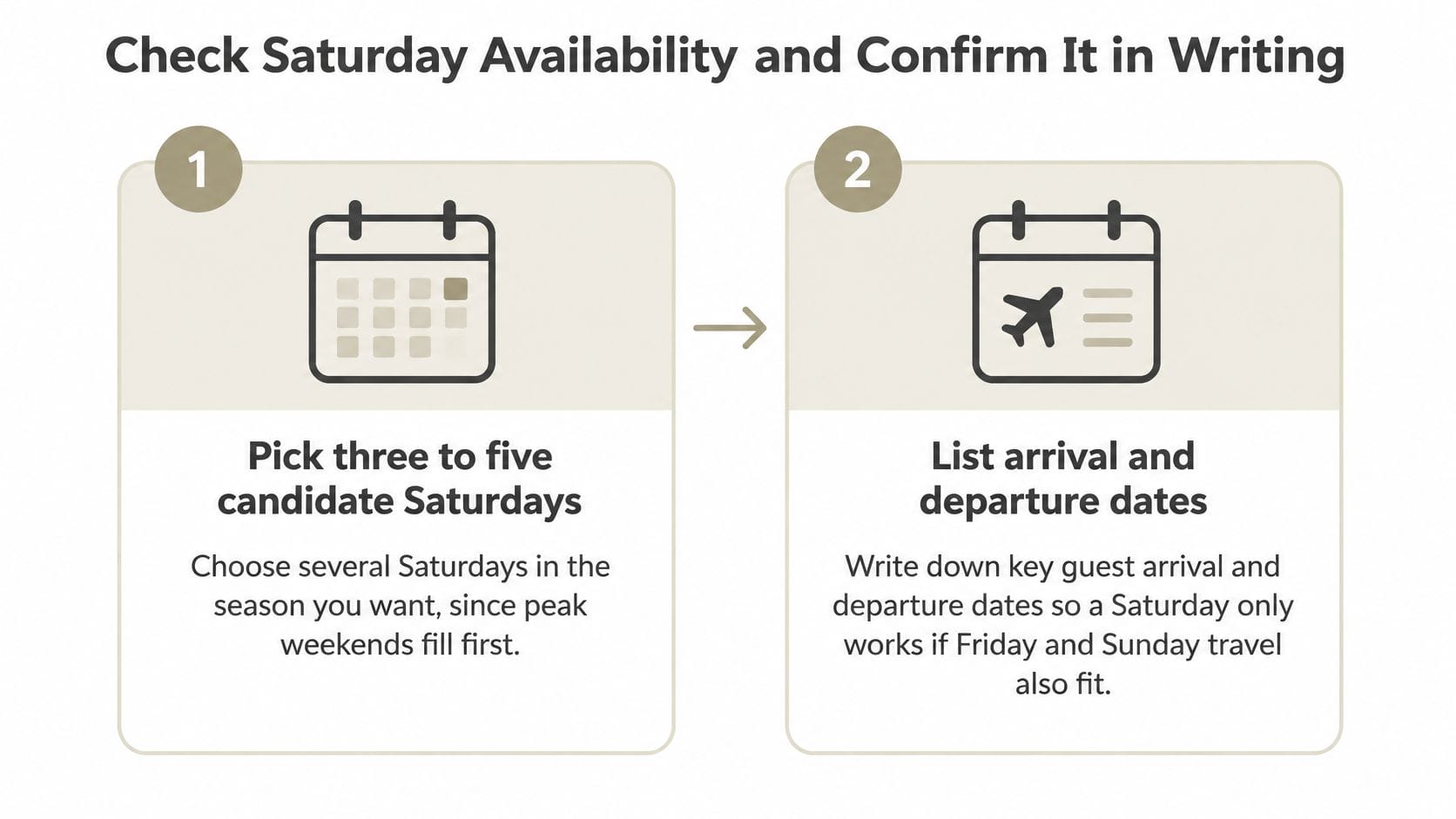
Pick three to five candidate Saturdays. Give yourself a workable selection within your preferred season rather than attaching the entire wedding to an unconfirmed date. Popular weekends may be harder to secure, and flexibility helps you compare venues without rushing.
List arrival and departure dates for key guests. A Saturday celebration only works if the surrounding travel days are practical for the people whose presence matters most. Mark work constraints, school commitments, and anyone who shouldn't arrive after a long drive immediately before the ceremony.
Define the full access window. Ask whether the proposed booking covers the ceremony, reception, setup, deliveries, rehearsal access, and teardown. A florist's installation and a rental company's collection can require access beyond the hours guests are present.
Get the hold procedure in writing. Establish whether a date is provisionally held, what action secures it, and exactly when any hold expires. Don't treat a friendly email about availability as a reservation.
Check lodging against the same dates. Confirm which accommodations are available for arrival, the wedding itself, and departure. An event date and an accommodation booking are different commitments unless the agreement explicitly combines them.
Send one complete inquiry to each venue. Include your estimated guest count, preferred season, candidate Saturdays, gathering format, lodging needs, fire or lighting ideas, and intended license arrangements. We welcome inquiries about weddings, retreats, events, and stays at taosgoji@gmail.com or 575.776.3971.
Record replies in one comparison sheet. Put every venue's answer against the same questions, including unresolved items. Blank cells should prompt follow-up rather than optimistic assumptions.
Compare the agreement, not the package name
Our destination wedding setting is surrounded by mountains, open skies, and New Mexico beauty. Use the wedding packages as a starting point for discussing your gathering, then rely on the written proposal and agreement for the actual inclusions.
A package title doesn't establish catering, staffing, rentals, exclusive use, or a weather-protected reception. Ask for each relevant item to be identified as included, optional, your responsibility, or unavailable.
| Booking detail | Written answer you need |
|---|---|
| Date and spaces | The event date and named areas included |
| Access | Vendor, guest, setup, and removal hours |
| Accommodation | Reserved units, stay dates, and booking responsibility |
| Payments | Amounts, due dates, and what confirms the reservation |
| Changes | Cancellation, postponement, and amendment terms |
| Outstanding decisions | Each unresolved item and who will answer it |
Say your caterer needs an early delivery, but the proposed access begins shortly before the ceremony. That's not a small scheduling detail; it may change staffing, rental arrangements, or whether the caterer can accept the job. Resolve it before paying for either service.
A confirmed Saturday means a written date, included hours, lodging status, and payment schedule. Once those are settled, arrange the clerk visit and send guests an arrival plan they can use. Keep the signed agreement and subsequent changes together so nobody is working from an outdated email.
Timing the Ceremony Around Travel and the Marriage License
You can arrive in New Mexico ready to marry and still be caught out by clerk hours or appointment requirements. New Mexico has no statewide waiting period for a marriage license, as the Santa Fe County Clerk's marriage-license guidance confirms. The license must still be issued before the ceremony, and same-day eligibility does not guarantee walk-in availability.
Check the office's hours, appointment process, identification requirements, and your travel schedule directly with the county clerk you plan to use. Requirements and procedures can differ by office.
Separate the legal timeline from the guest timeline
A New Mexico marriage license issued in one county can be used for a ceremony elsewhere in the state. After the ceremony, return the signed license to the issuing clerk within the required period. Confirm the return procedure with that office, and assign someone to handle it rather than leaving responsibility unclear between the couple and officiant.
Taos Goji hosts weddings ranging from an intimate elopement to a weekend-long celebration. For either format, complete the legal arrangements before guests arrive and your attention shifts to hosting.
Paperwork rule: Have the license ready before the ceremony day fills with arrivals, photographs, and vendor questions.
Build breathing room around the ceremony
A schedule that puts the clerk visit, a mountain-road journey, and the ceremony on the same day leaves little room for disruption. Arrange the legal steps before travel or hosting begins, and keep the document in a designated place rather than loose among travel papers.
Use this order:
- Secure the venue agreement: Establish the ceremony date before arranging clerk appointments.
- Confirm the clerk procedure: Ask directly about identification, attendance, payment methods, and office access.
- Obtain the license before hosting begins: Store it somewhere secure and easy to find.
- Brief the officiant: Agree who brings the license, checks that it is completed, and returns it.
- Allow an arrival buffer: Avoid making the drive to the venue the last task before getting ready.
For an elopement, keep the plan simple by reducing moving parts, not by skipping checks. For a longer gathering, leave unscheduled time for arrivals so the first evening can begin at an unhurried pace.
Backup Plans for Weather and Open Flame
Dry vegetation, gusting wind, and a sudden change in fire restrictions can affect an outdoor ceremony plan. Check current county rules and red-flag warnings shortly before the event, as well as when you book. The state's explanation of burn bans and fire restrictions outlines how heat, wind, and dry fuels factor into restrictions. Federal agencies may also set restrictions on public lands.
Put the backup decision on paper
Name the alternate ceremony location, the person who makes the call, and how much time vendors need to move guests and equipment. A covered space still needs to suit the guest count, accessible approach, catering setup, and expected wind.
Contingency matrix for a rural outdoor ceremony with fire or candles
| Contingency item | What to confirm in writing |
|---|---|
| Ceremony relocation | The covered or indoor space available for the event |
| Catering fuel source | Which fuels are allowed onsite and whether open flame is permitted |
| Guest transportation | The plan for mountain roads and fire-weather days |
| Evacuation routes | Routes for lodging guests and emergency vehicle access |
| Emergency communication | How lodging guests will be notified if fire weather changes |
| Postponement threshold | Agreed triggers, such as a red-flag warning or road closure |
Treat a red-flag warning as a prompt to review conditions, not as an automatic decision that applies identically at every property. Agree in advance who assesses the situation, who can stop activities, and who informs vendors and guests.
Inventory ignition sources before approving décor
List every proposed ignition source on the vendor plan, including items outside guests' view. A candle, propane cooking appliance, generator, fire pit, and vehicle near dry vegetation each raise different concerns.
Use electric candles or approved flameless lanterns as the default. Venue permission for an open flame does not override a current legal restriction.
Keep emergency vehicle access clear. Give lodging guests specific notification instructions, with a backup contact method and an agreed gathering point in case a group message does not reach everyone.
Wind can also shift décor and equipment. Secure ceremony structures, keep loose textiles away from heat sources, and have vendors state safe operating limits for their equipment. A useful backup plan gives everyone clear actions to take when conditions change.
Lighting the Evening Under a Dark Sky
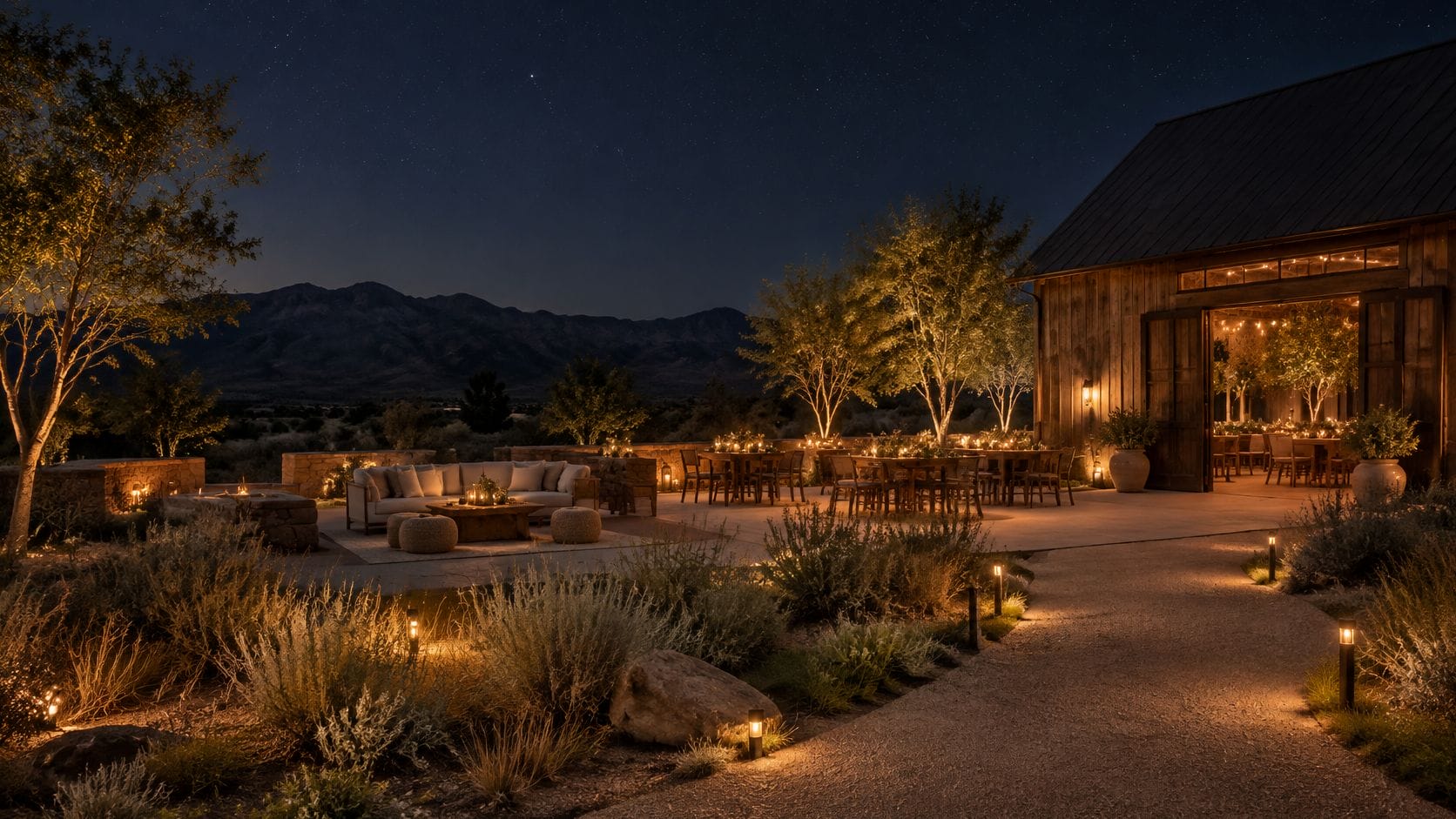
At a mountain venue, guests need enough light to find dinner, the dance area, and their lodging without lighting every field. Keep outdoor fixtures warm, directed downward, and on only where and when they are needed. Santa Fe County's guidance on responsible lighting and the Night Sky Protection Act explains these measures for protecting dark skies while maintaining safety.
Plan lighting around the actual guest journey: arrival, paths between gathering spaces, and the walk back to overnight accommodation.
Light the walk before the photograph
Start with stairs, thresholds, uneven surfaces, and restroom approaches. Low, shielded path lights should make changes in footing visible without shining into guests' eyes. Direct parking and service-area lights downward, too.
Add atmosphere after routes are clear. Place warm festoon lights or lanterns where they do not cast unnecessary light upward, and keep cables out of walking paths. A reception photo can look bright while the route back to a cabin remains hard to see.
Check the dance area separately. Confirm a stable surface, visible edges, and enough clear space for movement. Use first dance floorcraft tips to help the couple adapt their steps to the floor they have.
Give vendors a shared lighting plan
Ask vendors for a scaled lighting map, power-load estimates, fixture-shielding details, backup power arrangements, and a shutdown schedule. Mark which lights are decorative and which must stay on while guests and staff leave.
- During dinner: Keep tables readable and service routes clear without flooding adjacent fields.
- After dinner: Dim decorative lights where appropriate while preserving wayfinding.
- During departure: Keep routes to transport and accommodation visible until guests have left.
The embedded video shows an evening wedding setting. Use it for atmosphere; base fixture placement and power decisions on the venue's actual site plan.
Confirm who controls dimmers, responds to an outage, and authorizes shutdown. Get approval for any generator under the event's equipment and fire plan.
Taos Goji offers Rustic Farm & Barn wedding packages, with historic cabins and casitas for stays on its 40-acre retreat property in San Cristobal. Its mountain setting makes a practical lighting plan part of the guest experience: preserve the dark sky, while keeping gathering areas and routes easy to use.