
10 Questions to Ask Destination Wedding Venue in 2026
A couple sits at the kitchen table with two weekends circled on the calendar, a guest list that has doubled, and a photograph of a ceremony under an open mountain sky. The excitement is real. So is the low hum of logistics that starts the moment you picture people you love standing somewhere that isn't home.
Taos Goji hosts weddings that range from an intimate elopement to a weekend-long celebration, and the questions that matter shift with the scale and rhythm of the event. A twenty-guest ceremony on a June morning needs different answers than a three-day family gathering in October. What stays constant is this. The way a venue answers questions about lodging, weather, vendors, and contracts tells you how the property runs, long before anyone sets a table.
You don't need a hundred questions. You need the ten that expose how a rural mountain property works with its land, its weather, and its people. Here are the questions to ask a destination wedding venue, with notes on what to listen for in each answer.
Table of Contents
- 1. What is included in the venue rental, and what costs extra?
- 2. How many guests can the property comfortably host, and how does the space flow?
- 3. Can guests stay on the property, and how many lodging options are available for our dates?
- 4. What is the backup plan for weather at an outdoor ceremony or reception?
- 5. What are the rules for outside vendors, caterers, and florists?
- 6. Do you offer a coordinator, or should we bring our own day-of planner?
- 7. What are the setup, breakdown, and quiet-hours guidelines?
- 8. What paperwork and officiant arrangements are needed for a New Mexico wedding?
- 9. What are the deposit, payment schedule, and cancellation terms?
- 10. How will guests reach the property, and what is nearby for the weekend?
- What each question protects you from, and what to confirm in writing
- Turning Your Answers Into a Plan You Can Trust
1. What is included in the venue rental, and what costs extra?
Say you fall for a photograph of a ceremony on a ridge at golden hour and book before anyone asks what it costs to get guests to that ridge. That's the mistake this question prevents. A destination wedding carries more moving parts than a local one, and the base rate almost never covers what a couple pictures when they hear the word venue.
Venue and rentals account for about 29% of the overall wedding budget, and average U.S. domestic destination-wedding spending runs near $41,700 against $32,600 for a hometown wedding, according to Axiobench's wedding industry statistics. The rest of the budget lives in the details around the fee.
One page of line items prevents a season of guesswork.
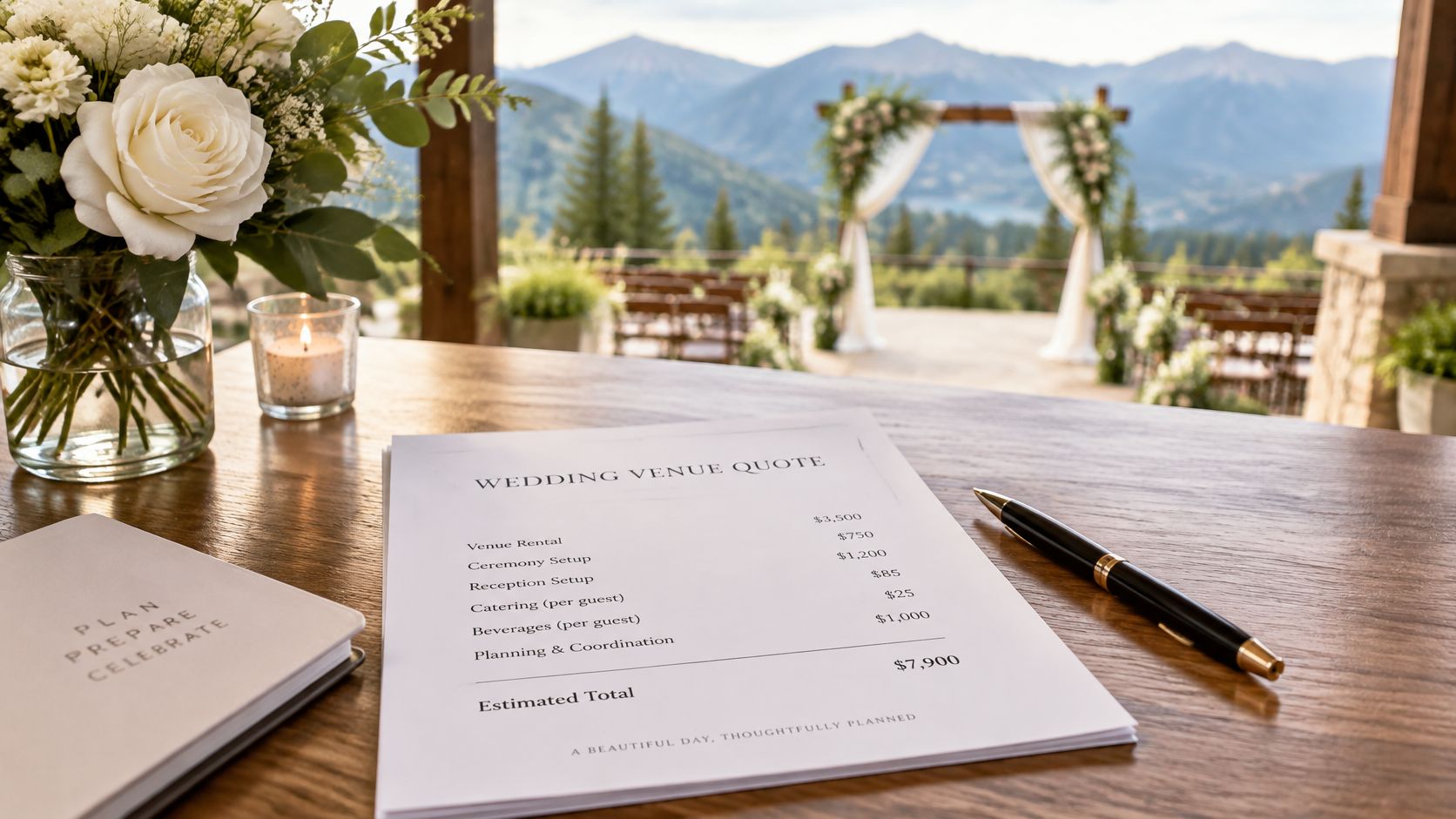
Ask the venue to walk the agreement line by line: ceremony site, reception space, barn, gardens, tables, chairs, linens, lighting, power, setup, cleanup, parking, and overtime. Ask which of those are bundled and which are add-ons. Then ask who supplies everything else.
- Request every item in writing. A quote with named categories can be compared against another venue; a package price cannot.
- Ask about vendor flexibility. Some properties require approved caterers or proof of insurance. Others open the prep space and step back.
- Ask what happens after hours. Overtime rates, staffing minimums, and whether the site fee includes someone to close up.
A couple planning a small mountain ceremony and dinner for twenty-five often finds tables and chairs included while catering, lighting, and rentals sit outside the package. Learning that in week one shapes the budget before the guest list does. Couples weighing a European option can read a cost guide for couples marrying in Italy to see how the categories get itemized abroad, and the categories barely change.
2. How many guests can the property comfortably host, and how does the space flow?
Capacity is a flow, not a number. A property can seat eighty for dinner and still feel tight at cocktail hour if everyone crowds one doorway. It can also host a modest ceremony on open ground while the indoor gathering room stays intimate for twenty.
Walk the property at the hour your event will happen.
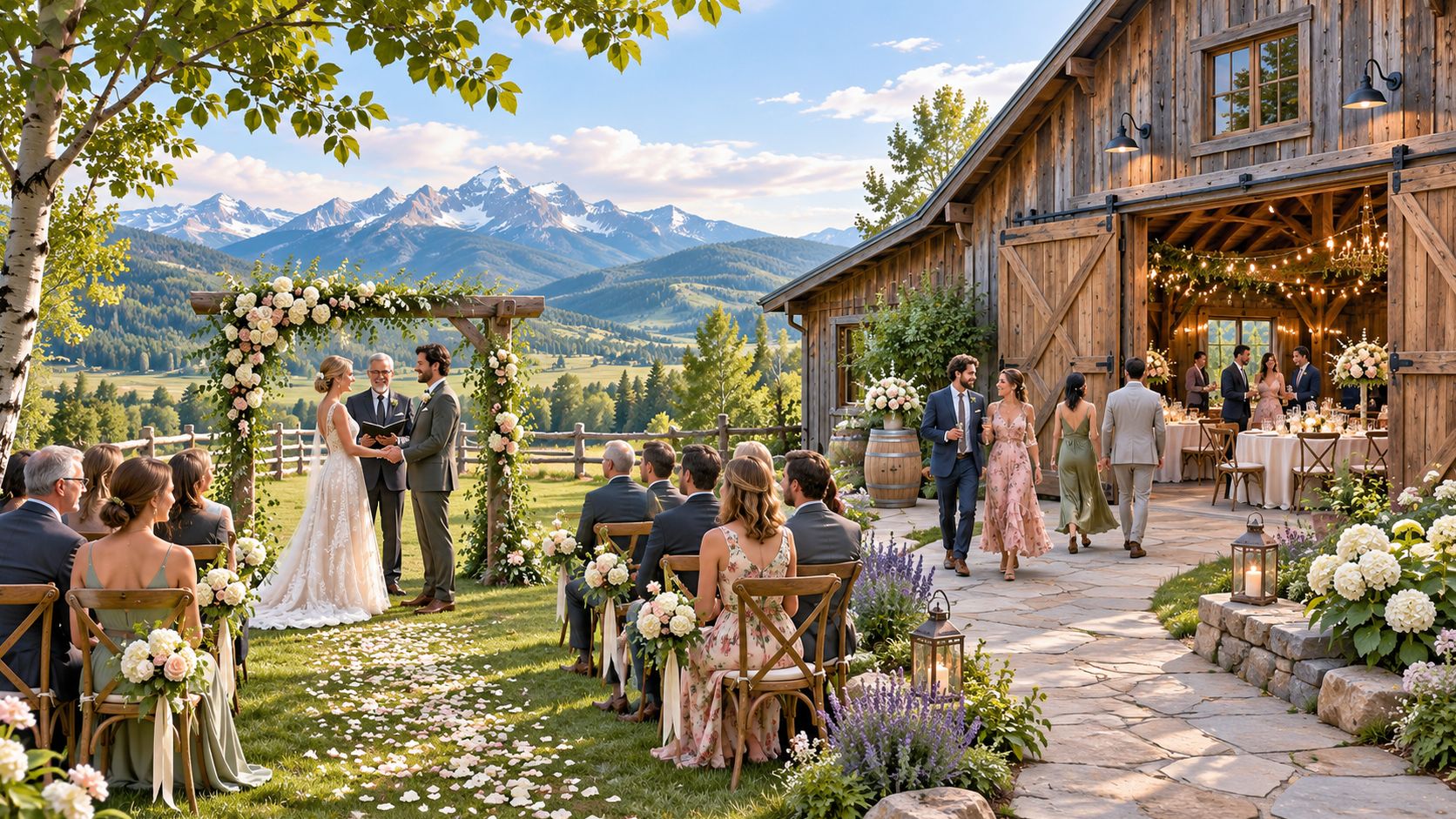
Real attendance runs below the invitation list, so plan from a realistic figure. One reported destination-wedding benchmark puts about 52 attending guests against 93 invitations, roughly a 56% conversion, per Vincent Vacations' destination wedding statistics. Model a low, expected, and high count before you sign anything.
Reading the Property as a Route
Ask where guests park, where they walk, how steep the path is, and what happens when a grandmother with a cane and a toddler both need to reach the ceremony site. On acreage, the distances between ceremony, dinner, lodging, and a quiet corner are part of the design, not an afterthought.
Here's how the day moves across the land.
- Sequence the day in order. Ceremony, cocktails, dinner, toasts, dancing, late-night conversation.
- Ask where guests wait. Shade, seating, and water matter in high-desert sun.
- Test the indoor fallback's real capacity. A room that holds thirty comfortably should not be listed for eighty.
An organizer planning a memorial might choose a quiet indoor space for the service and a garden for informal conversation afterward. A sixty-guest celebration can divide the day between a barn reception and an open-air ceremony with mountain views.
3. Can guests stay on the property, and how many lodging options are available for our dates?
Guests pay for lodging more often than couples expect. In The Knot's 2024 Guest Study of 1,000 U.S. adults ages 18 to 54, 65% of respondents paid for lodging, and price was the leading accommodation factor for 79% of them, per The Knot's wedding guest cost findings. Where people sleep is part of the venue decision, not a separate errand you handle later.
Ask how many guests can stay on the property, what kinds of rooms exist, whether they're held in a block, what minimum-night rule applies, and whether guests can book independently without hidden fees.
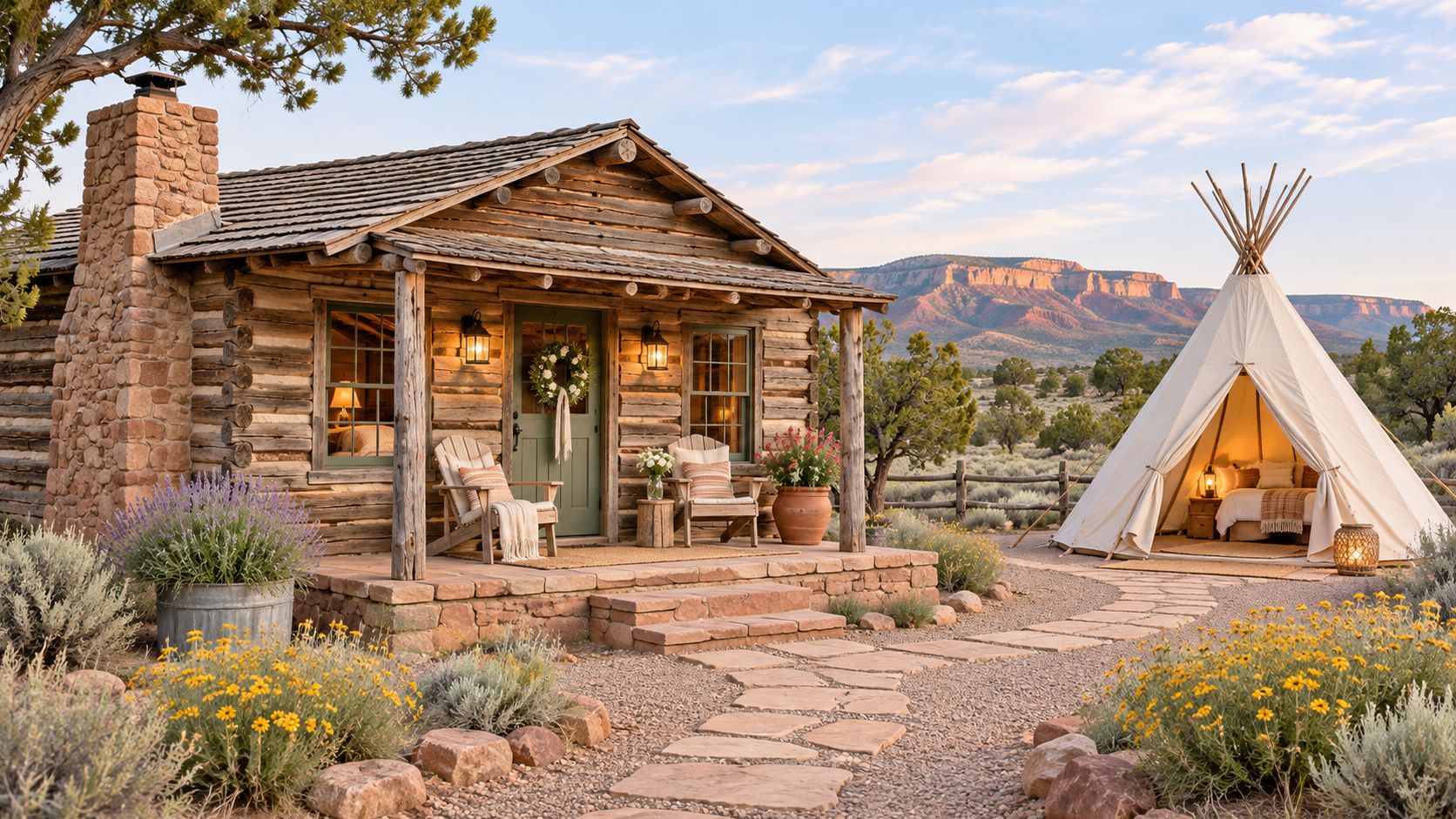
On-site lodging changes the shape of a weekend. Guests walk back from the last toast instead of finding a driver, and breakfast the next morning happens by accident rather than by plan. Taos Goji keeps historic cabins, casitas, and glamping tipis on the same 40 acres as the gathering spaces, so a group can house different guests in one place. Availability depends on your dates, so confirm for your specific weekend rather than assuming.
A three-day gathering might assign cabins to family and a casita to the wedding party, creating a shared base. A small retreat can mix a tipi stay for one attendee with cabin rooms for the rest. If you're comparing properties that combine overnight space with event space, this guide to wedding venues in New Mexico with on-site lodging walks through what to weigh. Ask about check-in and check-out times too, since a noon checkout and a noon ceremony decorate the same hour.
4. What is the backup plan for weather at an outdoor ceremony or reception?
Northern New Mexico hands you wide skies and hard sun, then sends an afternoon storm across the mesa in July and August. Evenings cool down fast, and spring wind has its own opinions. An open-air ceremony is one of the best reasons to marry here. It also needs a plan that exists before the forecast turns.
Ask what indoor or covered space is available, how quickly a setup can move, who makes the call, and by what hour.
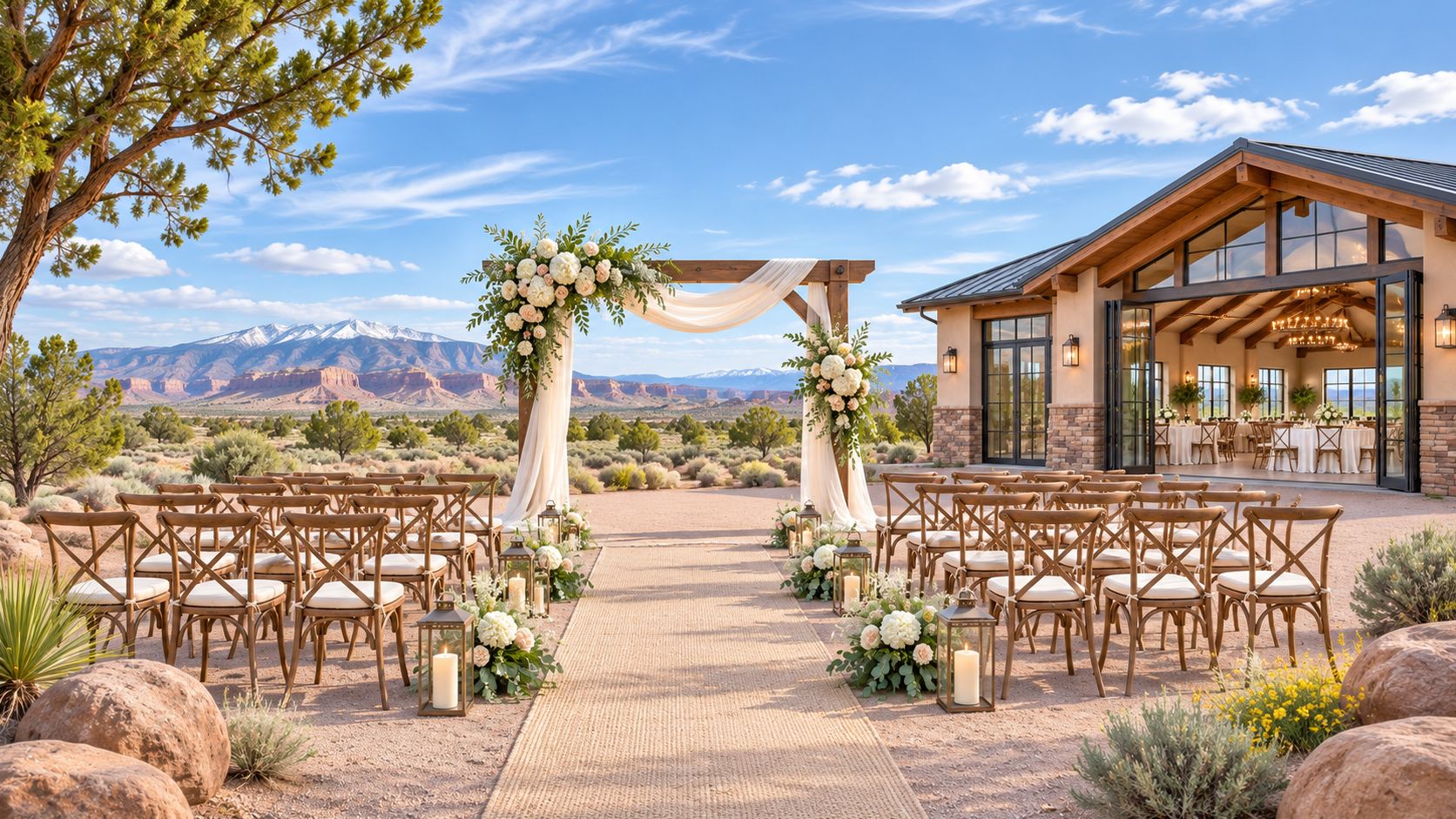
Protection doesn't stop at rain. Some couples add cancellation coverage for the parts that would otherwise be lost. In a 2024 wedding-insurance research report, 45% of planners recommended wedding cancellation insurance, and the report notes that cancellation coverage may reimburse non-refundable expenses after qualifying events such as severe weather, illness, or vendor failure, per Brite's wedding insurance research.
What a Real Backup Covers
A moved ceremony is not a weather plan. Dinner, lighting, sound, photography, guest shelter, and the walk back to lodging all need an answer, and so does smoke or extreme heat, which can be more disruptive than rain.
Ask this one plainly. If it rains at four o'clock, where does dinner happen, who moves it, and what does that cost?
For couples weighing open-air settings across the region, this roundup of outdoor wedding venues in New Mexico is a useful starting point. Then set your decision deadline in writing, two or three days out, and put it on the calendar where you'll both see it.
5. What are the rules for outside vendors, caterers, and florists?
Picture a couple flying in with a photographer they've followed for years and a florist from home who has never worked at altitude. The venue's vendor rules decide whether that plan is simple or expensive. Ask whether you may bring your own caterer, florist, musician, and photographer, whether any of them need approval, and whether they must carry insurance before they arrive.
Ask about loading access, delivery windows, parking for vendor vehicles, and whether a prep area or kitchen is available.
Permits often follow the guest count and the plans rather than the property line. Los Alamos County requires a Special Event Permit when an event anticipates 100 or more attendees, is open to the public, includes alcohol, or uses amplified sound between 9 p.m. and 7 a.m., and events using vendors may need a separate vendor permit, per Los Alamos County's special event and vendor permit guidance. The same guidance notes a $1 million liability-insurance requirement naming the county as an additional insured for applicable permitted events.
A venue that can name its permit holder and its insurance requirement in the first conversation has done this before.
A couple who wants a regional chef should confirm early that outside catering is welcome and that the prep space can handle a plated dinner. A corporate offsite organizer should ask how a local audiovisual provider will reach the property and what power is available on site.
6. Do you offer a coordinator, or should we bring our own day-of planner?
Someone has to hold the timeline on the day, and that person is either on the venue's payroll or on yours. The answer changes your budget and your sanity. Ask whether the property provides an on-site coordinator, whether that person manages vendors or only the building, and whether they can recommend planners who know the land.
Where the Timeline Actually Lives
There's a real difference between a venue contact, a site manager, and a planner who works for you. The venue contact answers questions about the property. A site manager opens doors and solves building problems. A planner carries your run of show, calls vendors when a florist runs late, and decides whether to move dinner inside.
Ask for the name of the person who will answer the phone at seven the morning of your wedding.
For a multi-day retreat or a weekend wedding, the coordination load multiplies. Room readiness, session setup, meals, and the gap between one gathering and the next all need an owner. A couple living out of state often hires a local day-of coordinator and lets the venue handle the property itself, which is the cleanest division. Whatever you choose, put the timeline in writing, share it with everyone who touches the day, and schedule one planning call early enough that questions don't stack up in the final week.
7. What are the setup, breakdown, and quiet-hours guidelines?
A couple planning a sunset ceremony wants the vendor team finished and the lighting checked before the light softens over the mountains. An artist retreat that closes with a shared dinner needs a clear end time so attendees can rest before the next morning's work. Both depend on the same thing: a written schedule the venue honors.
So ask for the hours in plain terms. When may vendors arrive? How long does setup take on this ground, and how long does breakdown run? When must amplified music end, and do quiet hours apply to overnight guests sleeping steps from the reception? On a rural property, sound carries farther than anyone expects across open acreage, and the stillness you came for is the same stillness your guests need at midnight.
Local rules can sit behind those answers. Albuquerque's special-event guidance notes that events with amplified sound may require a Temporary Noise Permit submitted online through ABQ-PLAN, described as free, per the City of Albuquerque special event permits page. A permit covers the paperwork for the event. It does not excuse noise that disturbs neighbors or guests.
- Get the full hour list in writing. Vendor arrival, ceremony, dinner, music cutoff, breakdown, and departure.
- Build a thirty-minute buffer. A reception that ends at ten shouldn't have a vendor loading a truck at ten.
- Share quiet hours with guests. Put them in the welcome note, not in a hallway conversation at eleven at night.
8. What paperwork and officiant arrangements are needed for a New Mexico wedding?
Paperwork is the least romantic item on this list and the one most likely to cause a bad week. A New Mexico marriage license comes from the county clerk's office, and the ceremony has to be performed by someone authorized to officiate. Confirm current requirements, office hours, and document rules directly with the clerk's office before you travel, since details change and a phone call costs less than a second trip.
Then ask the venue three things. Whether they host ceremonies with outside officiants, whether they keep a list of local officiants who know the property, and who is responsible for the license after the ceremony.
A couple driving up from Texas might collect the license at the county office on arrival and hand it to their officiant before the rehearsal. An elopement pair may prefer a local officiant who has stood on that ground before and knows how the wind behaves at the ceremony site. Either works. What doesn't work is discovering on a Friday afternoon that the person you asked to sign the license isn't registered in this state.
9. What are the deposit, payment schedule, and cancellation terms?
Money terms deserve the same attention as the view. Ask for the deposit amount, the payment schedule, which payments are refundable and by what date, what happens if you move the date, what a rescheduling fee looks like, and how much written notice each side must give.
Read the cancellation clause for two situations, because they aren't the same. A deposit labeled nonrefundable generally protects the venue when you cancel. A venue canceling outside the circumstances its contract permits is a different matter, and the outcome depends on the cancellation and force-majeure clauses, payment terms, the reason, and applicable state consumer-protection law, as Peerspace's guide to a canceled wedding venue explains.
The Clause Couples Skip
Force majeure sounds like boilerplate until wildfire smoke or a closed road enters the picture. Ask whether the listed events include wildfire, extreme weather, government restrictions, property damage, or utility failure, and whether the remedy is a refund, a reschedule, a credit, or relocation.
A couple booking a multi-day celebration might negotiate a date-change clause in case a parent's travel plans shift. A company booking a retreat should line the cancellation timeline up with its own internal approval calendar, so a signed contract doesn't outrun the budget sign-off. Compare the venue's terms against your event insurance and vendor agreements so a cancellation doesn't leave deposits and airfare uncovered.
10. How will guests reach the property, and what is nearby for the weekend?
Travel is where a beautiful plan meets a rental car counter. Zola's 2024 survey of nearly 7,000 couples found that 36% of weddings required guests to travel by plane, train, or a long automobile ride, including 28% of U.S. weddings and 8% of international weddings, per Zola's 2024 wedding report. Every one of those guests is doing math about cost and time before they RSVP.
That math is worth naming out loud. Zola's 2025 report notes that destination-wedding guests commonly spend between $840 and $1,680 when they travel to the event, per Zola's 2025 wedding report. Sharing an honest estimate early is a kindness, and it helps couples decide which parts of the weekend are optional.
Ask the venue for driving directions, the nearest airport most guests use, whether shuttles or shared rides can be arranged, and what the roads do in winter. Taos Goji sits in San Cristobal, about 11 miles north of Taos, close enough for a dinner in town and far enough that the night sky stays dark.
Arrival instructions are part of the hospitality, not an afterthought.
A planner might send a welcome note with the address, directions, and a rental car suggestion. A writers' retreat organizer could add a short list of Taos bookshops and cafés for the hours between sessions. For couples drawn to a looser, more personal style, this look at boho wedding venues in New Mexico may help frame the aesthetic questions too. Plan for thin cell coverage on the approach and include printed directions.
What each question protects you from, and what to confirm in writing
| Item | Core Concern | Confirm in Writing | Best For |
|---|---|---|---|
| What is included in the venue rental, and what costs extra? | Rental inclusions and additional fees | Itemized costs, reserved spaces, access hours, equipment, lodging, and vendor policies | Comparing venue costs and planning a realistic budget |
| How many guests can the property comfortably host, and how does the space flow? | Guest capacity and movement between spaces | Capacity by event setup, space layout, walking routes, and accessibility | Planning guest comfort, seating, and event flow |
| Can guests stay on the property, and how many lodging options are available for our dates? | On-site lodging types and availability | Available units, group booking terms, deposits, and check-in times | Keeping wedding guests together and simplifying travel |
| What is the backup plan for weather at an outdoor ceremony or reception? | Weather contingencies for outdoor events | Indoor or covered alternatives, decision deadline, and comfort provisions | Couples planning an outdoor ceremony or reception |
| What are the rules for outside vendors, caterers, and florists? | Vendor access, approvals, and requirements | Vendor policies, insurance requirements, approved providers, and delivery logistics | Couples choosing their own vendors |
| Do you offer a coordinator, or should we bring our own day-of planner? | Coordination responsibilities on the event day | Coordinator availability, point of contact, and responsibility for timelines and vendors | Destination events needing local planning support |
| What are the setup, breakdown, and quiet-hours guidelines? | Event timing, sound limits, and overnight quiet | Setup and departure windows, music limits, quiet hours, and cleanup timing | Events with vendors and overnight guests |
| What paperwork and officiant arrangements are needed for a New Mexico wedding? | Marriage license and authorized officiant requirements | Current license steps, officiant arrangements, and timing | Couples marrying in New Mexico, especially those traveling from out of state |
| What are the deposit, payment schedule, and cancellation terms? | Financial commitments and options if plans change | Deposit, payment dates, refunds, cancellation, rescheduling, and lodging terms | Couples or groups managing event budgets and booking risk |
| How will guests reach the property, and what is nearby for the weekend? | Transportation, directions, and nearby amenities | Address, travel guidance, transportation options, and local recommendations | Destination events with out-of-town guests |
Turning Your Answers Into a Plan You Can Trust
Keep these questions in one document and ask each venue for written answers. Compare properties on the same terms, in the same order, so the differences show up as facts instead of impressions. Two venues that both quote a site fee will separate quickly once you set lodging, transport, staffing, and overtime beside each other.
Read the small answers as closely as the large ones. A venue that knows its shuttle options, its quiet-hour policy, and its decision deadline for weather has run this weekend many times. A venue that answers those questions with "we'll figure it out" is telling you something too, and it's worth hearing before a deposit rather than after.
Watch how the answers arrive. Written, specific, and prompt is the standard. Vagueness about who holds the permit, who moves dinner indoors, or who signs the marriage license usually shows up again on the day, when you have the least room to solve it. Ask follow-up questions until each item has a name, a date, and a cost attached.
Then walk the property with that document in hand. Stand where the ceremony will happen at the hour it will happen. Look at the walk from the cabins to the barn, the shade at four in the afternoon, and the place where guests will gather if the sky turns. A rural mountain property asks more of a plan than a hotel ballroom, and it gives back something a ballroom can't.
If you would like to see how the historic cabins, the rustic barn, and the open acreage of Taos Goji might suit your celebration, retreat, or gathering, reach out with your preferred dates and guest count. We welcome inquiries about weddings, retreats, events, and stays, and the property offers a destination wedding venue surrounded by mountains, open skies, and New Mexico beauty, along with Rustic Farm & Barn wedding packages. Bring your questions. The answers are easier to trust when you've stood on the ground yourself.
Taos Goji gives couples a place where the ceremony, the lodging, and the weekend all happen on the same 40 acres north of Taos, so guests aren't driving between a venue and a hotel at midnight. Bring the ten questions above to a conversation with us about dates, guest counts, and which spaces fit the gathering you're imagining. Visit Taos Goji to see the cabins, the barn, and the open ground for yourself.