
Best Elopement Venues in New Mexico: A Practical Guide
Maybe you're picturing vows beneath the mountains near Taos, followed by dinner with the people who made the trip. Then come the less romantic questions: Where will everyone sleep? Can you bring chairs? Do you need a permit for a ceremony with six guests?
The best elopement venues in New Mexico give you a way to answer those questions without losing sight of the day you want. A historic site, a public-land overlook and a working farm offer very different experiences. If you're looking at Taos elopement venues, start with your guest list, your dates and whether you want to gather for a few hours or stay awhile.
Table of Contents
- Best Elopement Venues in New Mexico at a Glance
- Private Retreat Venues With Lodging and Gathering Space
- Public Land Permits and the Booking Timeline
- Historic Sites With Documented Significance
- Altitude and Seasonal Weather for Outdoor Ceremonies
- Marriage License and Fire Rules to Confirm First
- Arrival Logistics for Out-of-Town Guests
- Choose Your Venue and Send an Inquiry
Best Elopement Venues in New Mexico at a Glance
| Venue | Setting | Lodging or Gathering | Permit or Booking | Best For |
|---|---|---|---|---|
| Taos Goji | San Cristobal, just north of Taos; family-owned historic farm | Historic cabins and gathering spaces | Inquire through our website | Private weddings, retreats and multi-night groups |
| Bandelier National Monument | National Park Service site | Confirm authorized ceremony areas and arrange lodging separately | Special Use Permit required for every ceremony | Organizers who can accommodate a multi-week approval process |
| Valles Caldera | Public-land landscape | Confirm gathering locations and overnight arrangements with the agency | Group-size permit trigger; open flames prohibited | Couples comfortable planning around permit and fire rules |
| Jemez Historic Site | North of Albuquerque; mission and archaeological remains | Interpretive center and accessible trails | Confirm ceremony permission and permitted areas directly | Celebrations shaped by historic interpretation |
| Palace of the Governors | Santa Fe; nationally significant historic building | Confirm whether ceremony or gathering space is available | Ask the managing institution about ceremony eligibility | Couples seeking a documented historic backdrop |
| New Mexico State Parks | Park landscapes across the state | Confirm facilities and overnight options with the selected park | Wedding permit and advance application required | Couples who can work within park-specific conditions |
Treat this as a shortlist, not a promise that every site will accept your ceremony. A place can be historically compelling without ever operating as a bookable wedding venue. And public access doesn't mean permission to hold an event.
Read the table through your actual plans
Do guests need beds onsite? If family members will want to rest, change clothes or slip away for an hour, lodging belongs near the top of your list. With a ceremony-only location, someone has to coordinate the next leg of the journey.
Does your calendar allow a multi-week permit process? A flexible date gives you room to work with an agency. If flights are already booked, find out whether authorization is even feasible before you commit to flowers, photography or rentals.
Does a historic story matter more than privacy? Interpretive sites can give the day real depth, but they aren't automatically yours alone. Ask whether visitors, scheduled programs or restricted areas will get in the way.
Selection rule: Choose the venue that fits your guest count, lodging needs and paperwork timeline, not simply the most photographed view.
A couple traveling alone may find a permitted public setting well worth the administration. A small gathering with relatives staying overnight is usually easier on private property. Neither is better. The right choice takes away the complications you'd least like to manage.
Private Retreat Venues With Lodging and Gathering Space
Taos Goji is our 40-acre working organic farm and retreat center in San Cristobal, 11 miles north of Taos. Gardens, orchards and fields share the property with historic cabins and casitas. The mountains are close, the sky feels wide, and there's room to spend time together without packing the whole celebration into one afternoon.
That's what makes a farm stay worth considering if you're searching for an intimate wedding venue near Taos. Guests can settle into lodging on the property, and you can plan the ceremony and the time around it as one gathering rather than a string of separate stops. We host weddings from intimate elopements to weekend-long celebrations and offer Rustic Farm & Barn wedding packages. Ask us which lodging and gathering spaces fit your group before you settle on a plan.
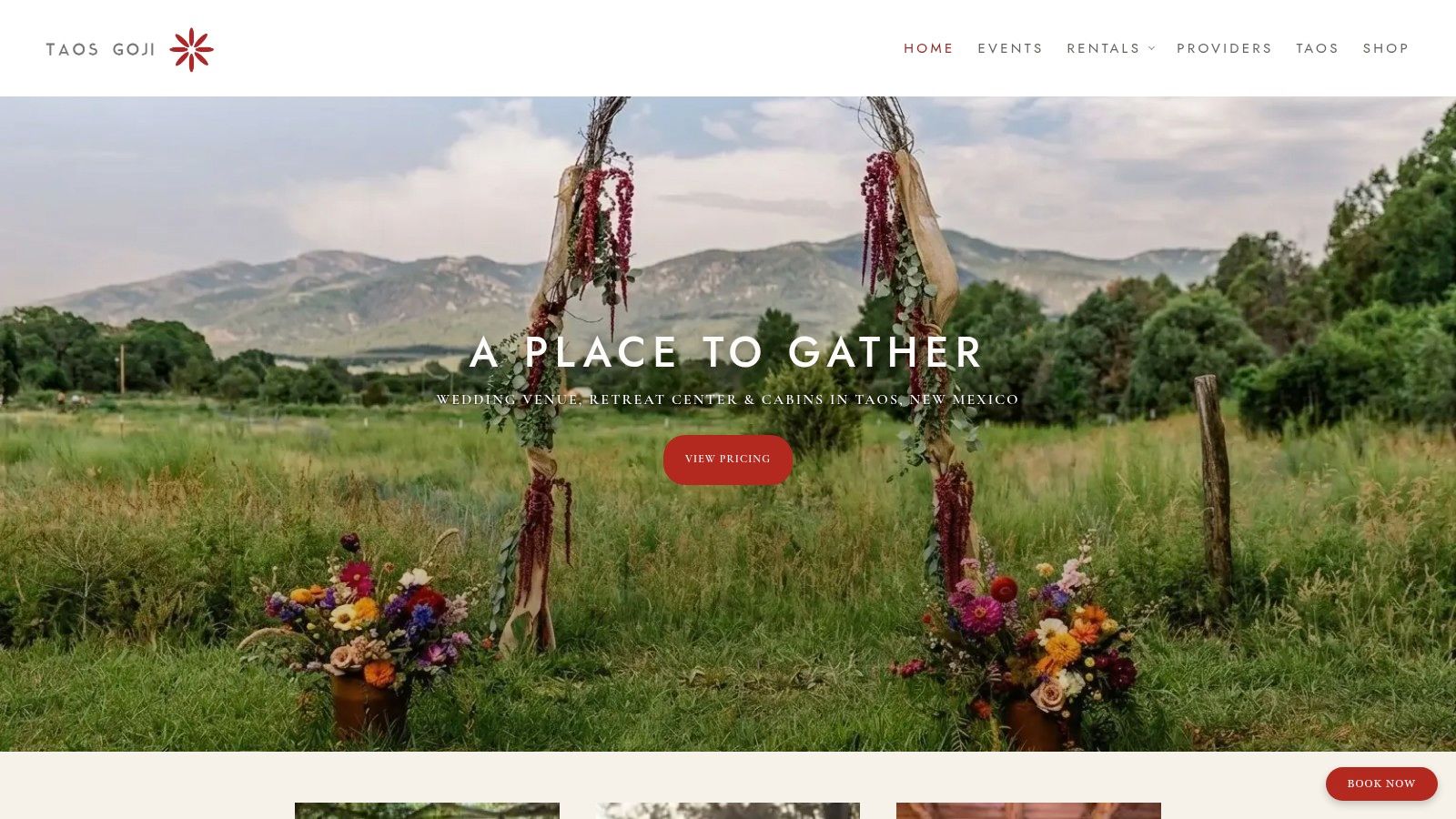
A farm setting with room for different rhythms
An elopement may need little more than open ground, a quiet cabin and time outside. A workshop or retreat asks more of the land: beds that keep the group together, room for sessions, and unscheduled hours when people can walk, talk or simply rest. Tell us what your gathering looks like before you pick a layout, and we'll confirm which parts of the property fit.
The gardens, orchards and fields aren't a backdrop brought in for a wedding. They're part of our working organic farm. The cabins are named for artists and writers who once stayed here, and the property was a gathering place for artists, writers and visionaries long before today's celebrations. That history feels more at home in a slow weekend together than in a tightly timed photo stop.
High-desert weather rewards an unhurried first day. Keep arrival hours light, put water where guests gather, and treat indoor or covered space as part of the ceremony plan, especially if wind, sun or a fast storm would be hard on older relatives standing in the open.
What lodging-inclusive planning solves
Having lodging and gathering spaces on the same property gives everyone more time to be here, instead of coordinating another drive. Guests can settle into historic cabins or casitas, and wedding parties can use the Japanese hot tubs. If you're comparing New Mexico wedding venues with lodging, our guide to wedding venues in New Mexico with onsite lodging looks at what changes when people can stay close to the celebration.
Before choosing a layout, work out:
- Accommodation needs: Tell us who needs overnight lodging and which guests should stay close together.
- Gathering requirements: Describe the ceremony, the meal and any other activities you're considering.
- Space suitability: Ask us to confirm capacity, cabin arrangements and which areas suit your group.
We welcome inquiries about weddings, retreats, workshops and stays. Send your date and a sense of how you'd like the gathering to feel, and we'll confirm how the property fits, with beds, gathering space and pacing planned as one event.
Public Land Permits and the Booking Timeline
A ceremony on public land needs two things at once: the land manager's written authorization, and a date that survives the processing window. A private venue hands you a booking calendar. A public site puts an application queue in front of it, and the most common New Mexico land managers each treat elopements a little differently.
| Land Manager or Venue | Permit Trigger | Lead Time | Fee or Condition |
|---|---|---|---|
| New Mexico State Parks | Weddings and commercial photography | Apply at least 15 days before the event | Cost-recovery charges; proof of insurance when requested, according to the State Parks fees and permits guidance |
| Bandelier National Monument | Weddings, elopements, vow renewals and other ceremonies | Confirm the current processing window directly with the monument | Application fee and ceremony conditions set by the park; confirm before sending payment |
| Valles Caldera | Ceremonies and gatherings above a group-size threshold set by the preserve | Confirm the current processing window directly with the preserve | Restrictions on flames and equipment may apply; confirm current conditions |
Fees, group-size triggers and lead times differ from agency to agency and can change without much notice, so use the table as a starting point, not a guarantee. Confirm current instructions, costs and thresholds with whoever manages your exact location before you send payment or fix a ceremony time. One agency's permission tells you nothing about what another will allow.
Public-land ceremonies answer to an authorization calendar before they answer to a booking one. An application may need review, and the spot you love may come with conditions that change your setup. Paying the fee only files the request; approval is a separate step. High-desert locations add one more constraint, because elevation narrows the comfortable ceremony window at many public sites. The date you apply for should already account for season and altitude.
Work backward from the ceremony
Identify the land manager. Find out whether your exact spot falls under a national park site, a Bureau of Land Management field office, a national forest, a state park or a municipality. A familiar place-name isn't precise enough. Save the map pin for the spot you intend to use.
Confirm the ceremony trigger. Ask whether the vow exchange itself requires authorization and where the group-size threshold sits. A short guest list doesn't automatically remove the requirement, and a photo session may raise its own question.
Describe the physical setup. List the chairs, arch, flowers, amplified sound and anything else you plan to bring. Ask about parking, photographer access and where vendors can unload. An agency can assess a concrete plan much faster than a vague request for a small wedding.
Set your application deadline. Count backward from the event date using the agency's stated processing window, then leave room for questions or a change of location. Keep the permit decision separate from your vendors' cancellation deadlines.
Budget for conditions beyond the fee
Insurance, access limits and equipment restrictions can cost more than the application itself. Ask who supplies any insurance documentation and whether your vendors need their own certificates. Keep the written approval with your event documents, and make sure the photographer and coordinator know its conditions before the day.
A beautiful public backdrop is only a workable venue when the authorized location, timing and setup match the ceremony you intend to hold.
If the approval window is tight, a private property is the easier road. It skips the application queue, though you'll still want to read the venue's own booking terms and permitted uses carefully. At Taos Goji, 11 miles north of Taos with lodging on site, the ceremony and the guest stays fall under one booking instead of an agency file.
Historic Sites With Documented Significance
A centuries-old wall lends a small ceremony a weight no rented arch can match. The New Mexico Department of Cultural Affairs describes the state's historic sites as representing more than 600 years of history and culture. That depth is the reason to go, so plan around it.
Historic significance draws travelers to landmarks on every continent, and New Mexico holds more than its share.
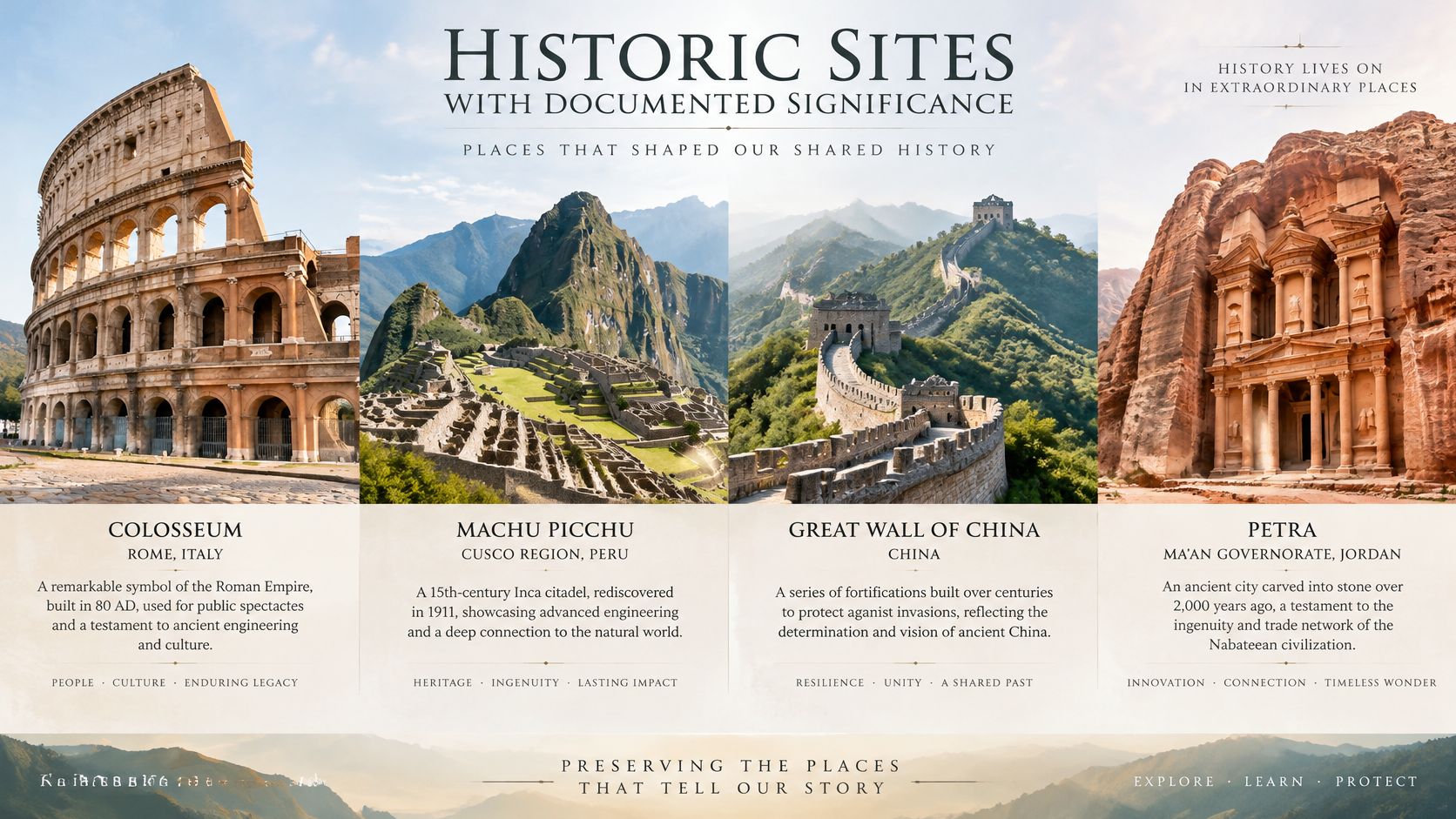
Santa Fe and Jemez offer different kinds of history
The state identifies Santa Fe's Palace of the Governors, built in 1610, as the oldest public building in the United States and a National Historic Landmark. That standing makes it a fine anchor for a trip built around history. But significance alone doesn't tell you whether your preferred courtyard, room or ceremony format is available.
Jemez Historic Site offers something different: prehistoric and historic remains beside the San José de los Jemez mission. It sits a drive north of Albuquerque, with accessible trails, an interpretive center and modern amenities. Dining, hiking, fishing and hot springs nearby can stretch the visit into a longer stay.
Say you're weighing the two for a small family celebration. Santa Fe suits a visit built around one nationally significant building. Jemez works better when you want guests reading the site, walking its trails and exploring the surrounding country between the ceremony and dinner.
Choose history deliberately
Pick a historic site when the place's story should shape what your guests learn and feel. Choose a private property when control over the gathering, and lodging within walking distance, matter more. Taos Goji sits somewhere in between. It's a working organic farm on 40 acres, 11 miles north of Taos, and its historic cabins and casitas are named for the artists and writers who once stayed here. The land was a gathering place for artists, writers and visionaries long before we welcomed couples.
Whichever way you lean, publicly managed sites run on rules you don't set. Visiting hours cover sightseeing only, and ceremony use needs separate approval. Staff guidance governs photography, access and sensitive areas, so confirm all three before you book travel.
Before you commit, ask:
- Interpretive schedule: Will tours, programs or public visiting hours fit the day you have in mind?
- Ceremony access: Which areas, if any, are open for vows, and what approval is needed?
- Photography and guest movement: Which areas are sensitive or off-limits, and what limits apply to a photographer's equipment?
A site that can't host your vows can still anchor the trip. Hold the ceremony where you have approval, then bring your guests for a scheduled tour.
Altitude and Seasonal Weather for Outdoor Ceremonies
| Factor | Research Value | Planning Response |
|---|---|---|
| Elevation | About 6,965 to 6,969 feet, as recorded in the Taos geographic summary | Short walks, shaded seating, water and no strenuous activity on arrival |
| Day and night temperatures | Pronounced afternoon-to-evening variation | Warm layers and a wind-protected reception space |
| Snowfall | About 28.4 inches annually, with typical snow conditions from October through April, in the NOAA-based Taos climate summary | Confirm cold-weather and snow exposure for the date |
| Annual precipitation | About 12.7 inches | Identify a covered ceremony alternative |
| Summer monsoon | Afternoon thunderstorms from early or mid-summer through September | Favor a morning ceremony; assess late afternoon cautiously and maintain a written backup plan |
| Seasonal exposure | Snow and freezing conditions require site-specific checking | Verify access, surfaces and shelter for the chosen date |
Taos elevation is a regional planning reference, not a measurement of every venue near it. Ask about conditions at your actual ceremony spot, especially if you're planning a mountain outing.
Guests flying in from lower elevations may tire faster or deal with headaches and dehydration. Don't make a strenuous hike the only way to reach the ceremony, particularly soon after arrival. A spot that looks close in a photograph can still mean an uneven, tiring walk.
Design the guest route before the décor
Walk the route from parking to seating, then from the ceremony to restrooms and shelter. Check the ground in the shoes your guests will probably wear. Find the places where someone can sit down without being cut off from the gathering.
- Water access: Put drinking water where people wait, not only at the meal.
- Seating and shade: Give guests somewhere comfortable before the ceremony starts.
- Arrival pacing: Keep optional hikes separate from the essential wedding events.
- Evening comfort: Tell guests to bring warm layers, even when the daytime forecast looks lovely.
Put the weather decision in writing
A sunny morning doesn't guarantee a dry afternoon during monsoon season. Morning ceremonies are the more conservative choice, and late afternoon should never be assumed storm-free. Lightning calls for real shelter, not just a pretty canopy.
Before you book, settle on the backup location, how many people it holds and who decides when to move. Confirm weather-safe electrical access for vendors, stable surfaces for photography gear and shelter within a short walk.
Weather test: If moving the ceremony means guests, rentals and vendors have to drive somewhere else, you don't yet have a simple backup plan.
Ask each venue about snow, icy surfaces and access in the season you're considering. A general recommendation for a month can't tell you whether your particular route or gathering area will work on the day.
Marriage License and Fire Rules to Confirm First
The marriage license is separate from permission to use a venue. Under the Grant County marriage-license guidance, both applicants must appear in person with proof of age and identity, normally government-issued photo identification, and get the license before the ceremony.
The license can be used for a ceremony anywhere in New Mexico, and the signed document must go back to the issuing county clerk within 90 days after the ceremony. Published county materials list a $55 fee in Grant, Santa Fe, Lea, Bernalillo and Chaves counties, but check payment methods and any card charges with the office you'll visit.
Keep the legal and safety checks separate
Choose a convenient issuing county. Build the clerk's visit into your travel plans. Confirm office procedures and identification requirements before you arrive, especially if either of you will use international documents.
Assign responsibility for returning the license. Decide who will check the completed document and send it to the issuing clerk. Keep a record of the return instead of assuming someone else handled it.
Check current fire restrictions near the event date. New Mexico's explanation of burn bans and fire restrictions notes that campfires, outdoor smoking, fireworks and debris burning can be prohibited on applicable non-municipal, non-federal and non-Tribal lands. BLM restrictions can also apply during high fire danger.
Get an answer for each flame-based item. Ask specifically about candles, lanterns, sparklers, grills and fire features. A venue's usual setup doesn't prove an item is allowed under current restrictions.
Choose décor that can adapt
Battery-operated candles are easier to swap in than redesigning a ceremony around a prohibited fire feature. Tell the florist, caterer and photographer about any restrictions so nobody shows up with something you can't use.
Our guide to outdoor wedding venues in New Mexico can help you think about the setting alongside the practical arrangements. Treat the license, the site permission and the fire checks as separate tasks, each with one named person responsible.
Arrival Logistics for Out-of-Town Guests
Your guests experience the destination long before they reach the ceremony. A late arrival, confusing directions or a surprise change of accommodation can make a quiet gathering feel complicated. International travelers need information they can use without any local knowledge.
Judge each venue from the airport onward. Compare airport access, nearby restaurants and medical services, lodging, local transport and how well the property handles a longer stay. If you're driving in from a neighboring state or elsewhere in the Southwest, look hard at the last rural stretch, not just the main highway.
Build one usable arrival plan
Measure the airport journey. Compare flight arrival times with realistic driving conditions. Don't choose an airport by straight-line distance alone.
Match beds to people. List who needs a place to sleep, which households can share and who might want something quieter. Event capacity and sleeping capacity aren't the same number.
Confirm the backup space. Make sure the alternative ceremony arrangement works for the whole group, including guests with mobility needs.
Assign transport. Decide who drives, who needs a ride and how anyone staying elsewhere gets back after the gathering.
Name the vendor contact. Ask who answers delivery and setup questions on site. A property contact isn't automatically a wedding coordinator.
Separate the venue plan from the travel plan
Our rural setting just north of Taos brings historic accommodation and gathering spaces together. That cuts down the number of addresses you have to coordinate, but it doesn't arrange airport transfers, manage vendors or provide transport.
Our guide to destination wedding venues in New Mexico is a useful companion while you weigh those trade-offs. We welcome inquiries about weddings, retreats, events and stays, and we can confirm the property arrangements that matter to your group.
Ask us for current bed configurations and space suitability directly. Work out drive times for your travel dates, and confirm transportation with whichever provider you plan to use. The venue can tell you what happens on the property; getting guests there comfortably is up to you and your planner.
Choose Your Venue and Send an Inquiry
Start with the people coming with you. Who needs a bed nearby? How much time do you have for permits? Do you want a place to visit for the ceremony, or a place to settle in together?
If staying close matters, look at New Mexico elopement venues with lodging. If a particular public-land view is the reason you're coming, give its permit process the time it needs. And if a historic site's story matters to you, first confirm whether ceremonies are allowed there. For a farm wedding near Taos, ask us about the spaces and lodging at Taos Goji so you can picture the whole stay, not just the vows.
Send an inquiry that can receive a useful answer
A specific message makes it easier to tell whether we're the right fit. Include:
- Your proposed date: Add alternative dates if you have flexibility.
- Your guest count: Separate overnight guests from ceremony-only attendees.
- Your lodging needs: Explain who needs to stay and for how long.
- Your gathering plans: Say whether you'd like the ceremony, lodging and extra time together on the same property.
Our address is 1530 and 1528 Old State Road 3, San Cristobal, New Mexico 87564. You can reach us at taosgoji@gmail.com or 575.776.3971 to talk through your plans.
Ask us to confirm current availability, capacity and booking terms before you commit to anything. You don't need a finished wedding plan to start the conversation, just a clear sense of who's coming and what you'd like the time together to feel like.
Taos Goji offers a historic farm setting, overnight accommodation and gathering spaces for couples considering an intimate northern New Mexico wedding. Visit Taos Goji to explore the property, then send your proposed date, guest count and lodging needs so we can talk about whether it's the right fit for your celebration.