
Best Company Retreat Ideas: Eight Formats for Teams
Your team arrives after a long year, carrying laptops, overnight bags, and the unfinished conversations that never quite fit into a video call. Someone unpacks in a historic cabin. Others walk the grounds before dinner, noticing the garden beds, the farm animals, and the mountains beyond the property.
During that first shared meal, the conversation begins to change. A colleague asks about something other than a deadline. Another stays at the table instead of reaching for a phone. Nothing elaborate has happened, but people have time to pay attention to one another.
The best company retreat ideas begin with that kind of practical fit between people and place. A working high-desert farm suggests a different rhythm from a conference hotel: focused mornings, time outside, small-group conversations, and evenings that don't require another presentation.
For organizers coordinating complex arrivals, outside help such as concierge travel support for family offices may be relevant to travel arrangements. The retreat itself still needs a clear purpose, whether that's a written plan, creative work, rest, or time together.
At our family-owned property in San Cristobal, northern New Mexico, cabins, gardens, a rustic barn, and outdoor gathering spaces offer several ways to shape that time. These eight formats range from a working corporate offsite to a quiet remembrance gathering, each grounded in how people can use the setting.
Table of Contents
- 1. Corporate Offsite on a Working Farm
- 2. Writing and Creative Retreat Weekend
- 3. Yoga and Wellness Retreat for Teams
- 4. Family Reunion and Multigenerational Gathering
- 5. Leadership Planning Retreat with Breakout Spaces
- 6. Memorial and Remembrance Gathering
- 7. Stargazing and Evening Circle
- 8. Farm Day and Harvest Gathering
- How the Eight Retreat Formats Compare
- Choosing the Format That Fits Your Team
1. Corporate Offsite on a Working Farm
A department arrives with a familiar problem: people work together every day, but rarely have enough uninterrupted time to resolve anything complicated. Instead of opening with presentations, the organizer gives everyone time to settle into their cabins before a shared meal and a brief conversation about the work ahead.
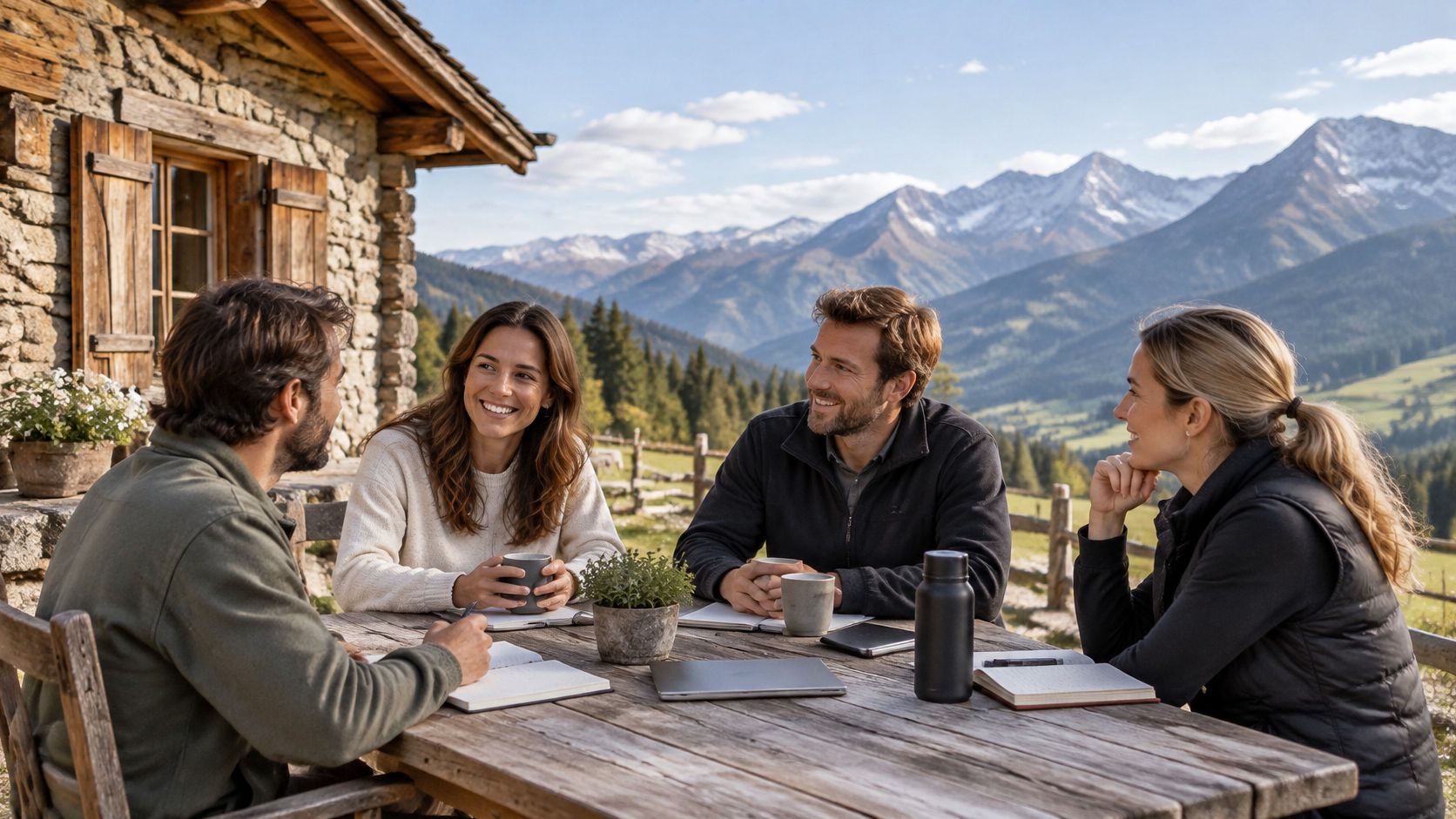
Taos Goji is a 40-acre historic farm, 11 miles north of Taos, with lodging and gathering spaces on the same property. That arrangement lets an organizer build a program around focused sessions, outdoor breaks, and time together without moving the group between separate hotels and meeting venues.
In a survey of U.S. full-time employees who had attended an offsite during the previous year, 85% said offsites strengthened organizational connections, according to Emburse's State of Corporate Offsites report. Connection is a useful objective, but it needs room in the schedule rather than an obligatory game squeezed between presentations.
Keep the Working Day Deliberate
Use the morning for a shared problem, such as improving the handoff between sales and operations. After lunch, send colleagues into smaller discussions, with an outdoor walk available where suitable.
- Define the output. Ask each group to return with a proposed change, an owner, and an unresolved question.
- Confirm practical arrangements. Discuss meeting layout, equipment, meal arrangements, and connectivity before finalizing the agenda.
- Coordinate arrivals. Consider shared transportation from Taos or Albuquerque, allowing for different arrival times and travel fatigue.
Our guide to corporate retreat venues in New Mexico offers additional planning context. Leave genuine space between sessions, so a useful conversation doesn't have to end when the next calendar invitation begins.
2. Writing and Creative Retreat Weekend
A marketing team brings campaign drafts rather than slide decks. After breakfast, each person finds a quiet place to work, then returns later with a passage, sketch, or idea that colleagues can discuss.
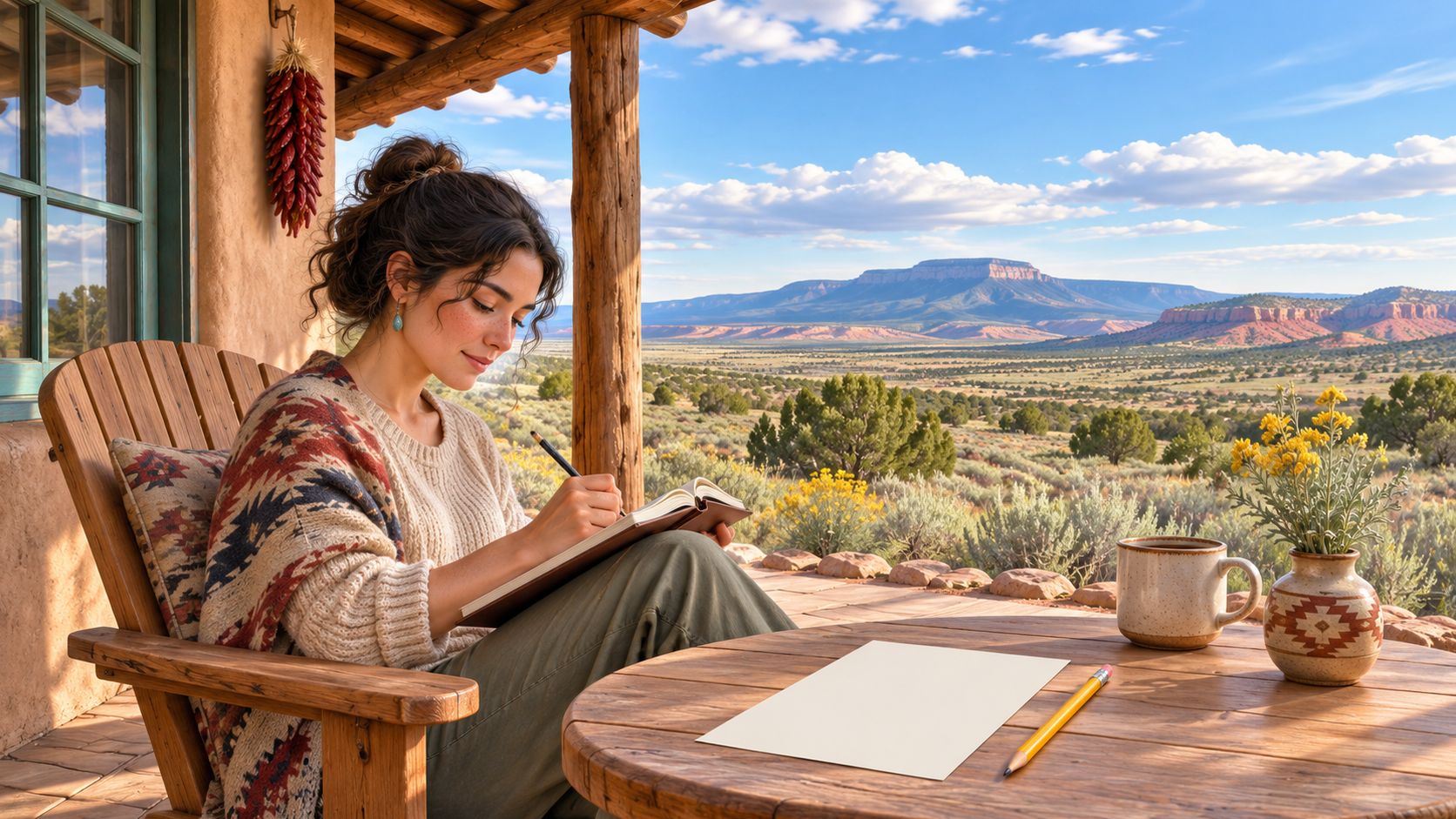
Our historic property has served as a gathering place for artists and writers. Cabins and outdoor spaces suit a creative retreat that alternates individual concentration with thoughtful group exchange, with work moved indoors whenever weather makes that the better choice.
Creative programming needn't be reserved for professional artists. The National Endowment for the Arts reported that 52% of U.S. adults created or performed art during the 2022 survey period, supporting an approachable format that welcomes beginners as well as experienced makers.
Give Everyone Something Concrete to Make
For a company team, choose a useful assignment: rewrite a customer story, develop a visual concept, or draft an explanation of the organization's purpose. A publishing group might instead bring manuscripts for revision and arrange a closing feedback circle.
Bring printed drafts, notebooks, drawing materials, and any project files participants need. A deliberately unplugged work session should be a choice, not the consequence of discovering that essential materials are unavailable.
Creative boundary: Ask colleagues to respond to the work, not judge the person who made it.
An invited writer or artist can lead a guided session, with arrangements made in advance. Keep reading aloud optional, and let participants submit work privately if they prefer.
In warmer conditions, an outdoor writing block can begin with close observation of the gardens or mountain light. During colder weather, the same exercise can start beside a cabin window, followed by a shared discussion indoors.
3. Yoga and Wellness Retreat for Teams
Not every team needs another ambitious agenda. After a demanding season, a retreat might begin with optional gentle stretching, an unhurried breakfast, and enough unscheduled time for people to decide what rest looks like.
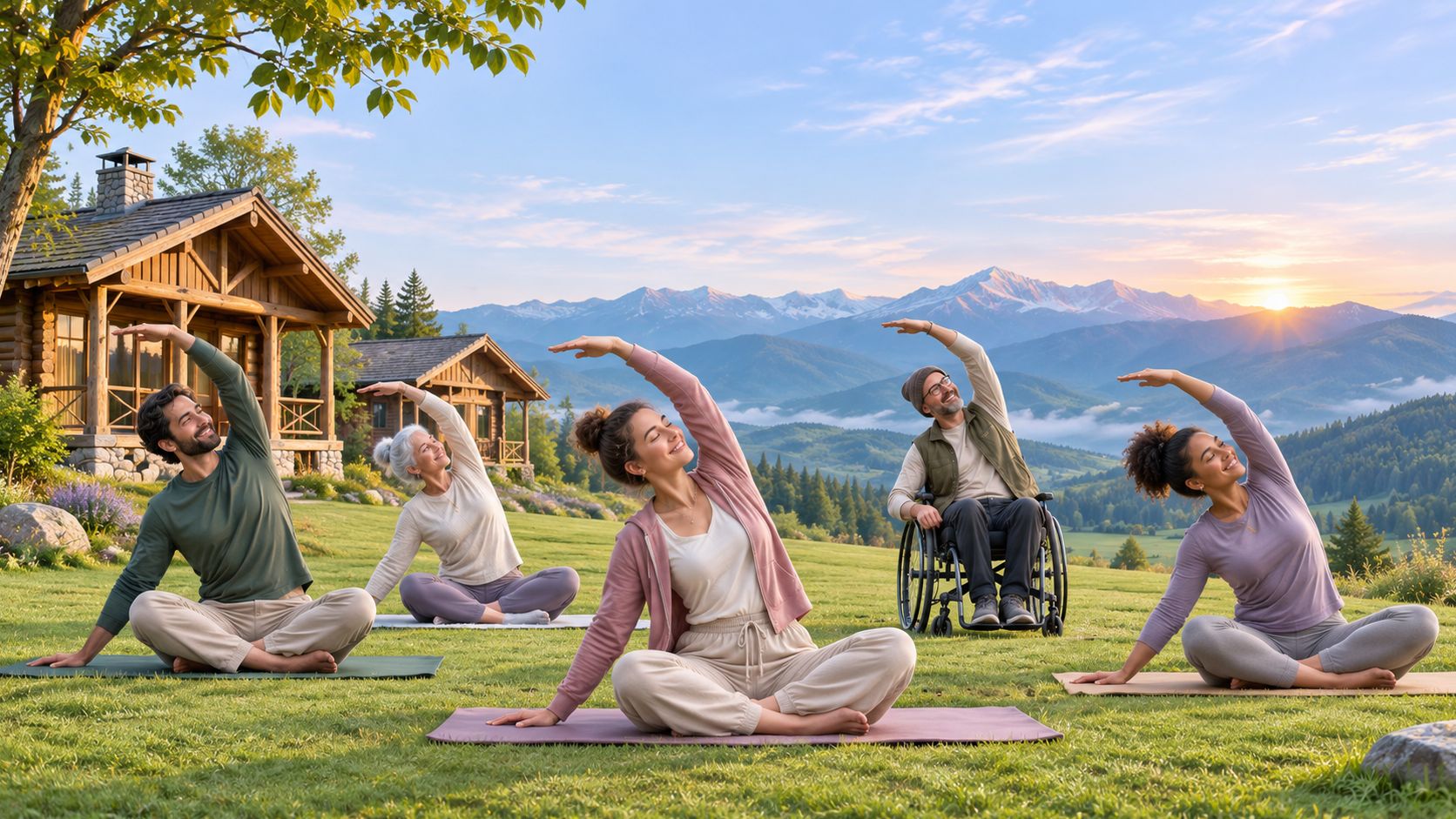
There's a clear reason to take that need seriously. Gallup's State of the Global Workplace report found that 41% of employees worldwide experienced a lot of stress during the previous day in its reporting on workplace conditions in 2024.
A retreat won't correct an unreasonable workload by itself. It can, however, give colleagues time to discuss what needs to change while offering a less demanding daily rhythm.
Make Rest Available Without Making It Compulsory
For a nonprofit staff gathering, plan an optional instructor-led movement session, a quiet journaling period, and a shared meal without work discussion. Offer seated participation or quiet free time alongside movement, rather than treating yoga as the only route into the day.
- Respect different bodies. Describe the activity plainly and let participants decide whether it suits them.
- Prepare for elevation and weather. Encourage hydration, layers, sun protection, and an easy arrival day.
- Arrange instruction deliberately. Confirm the instructor, suitable practice space, equipment, and indoor alternative before announcing sessions.
Our property has infrared and wood-fired saunas. Discuss access and arrangements when planning, rather than assuming that every wellness activity or amenity is included in a group stay.
For more considerations, explore our guide to yoga and wellness retreat venues in New Mexico. Keep work conversations bounded, and don't turn the final session into an assignment to become better at resting.
4. Family Reunion and Multigenerational Gathering
A child watches farm animals while an older relative sits on a cabin porch. Nearby, cousins compare photographs for an evening gathering, deciding which family stories need to be told again.
This isn't a conventional corporate offsite, but it's relevant for family businesses, founder-led organizations, and company gatherings that intentionally include households. A family-inclusive retreat needs its own design, rather than a business agenda with children expected to fit around it.
Our cabins, casitas, rustic barn, and outdoor gathering areas provide different settings for time together and time apart. Before choosing particular spaces, discuss access, seating, sleeping arrangements, and the needs of every generation.
Build Around Shared Anchors
A reunion might center on a meal, a family-history reading, and a garden photograph, subject to arrangements for the chosen spaces. Leave the surrounding time flexible so households can manage naps, quiet periods, and different waking hours.
- Choose a coordinator. Give lodging and meal questions a clear point of contact.
- Protect household independence. Don't require every relative to attend every activity.
- Review access early. Discuss paths, entrances, bathrooms, and distances with anyone whose participation depends on them.
- Keep children supervised. Treat animal areas and farm operations as working spaces, not unrestricted play areas.
A gathering can feel connected without keeping everyone together all day.
For a family business, separate business discussions from the reunion program and communicate that distinction before arrival. Relatives shouldn't discover at dinner that they're expected to participate in a planning session.
Season matters here, too. An outdoor meal may suit the group in mild conditions, while a colder-weather gathering needs a comfortable indoor plan and shorter periods outside.
5. Leadership Planning Retreat with Breakout Spaces
The most useful object at a leadership retreat may be a plain sheet of paper listing the decisions still unresolved. Bring that list, the relevant background material, and a facilitator who can keep discussion focused without controlling the outcome.
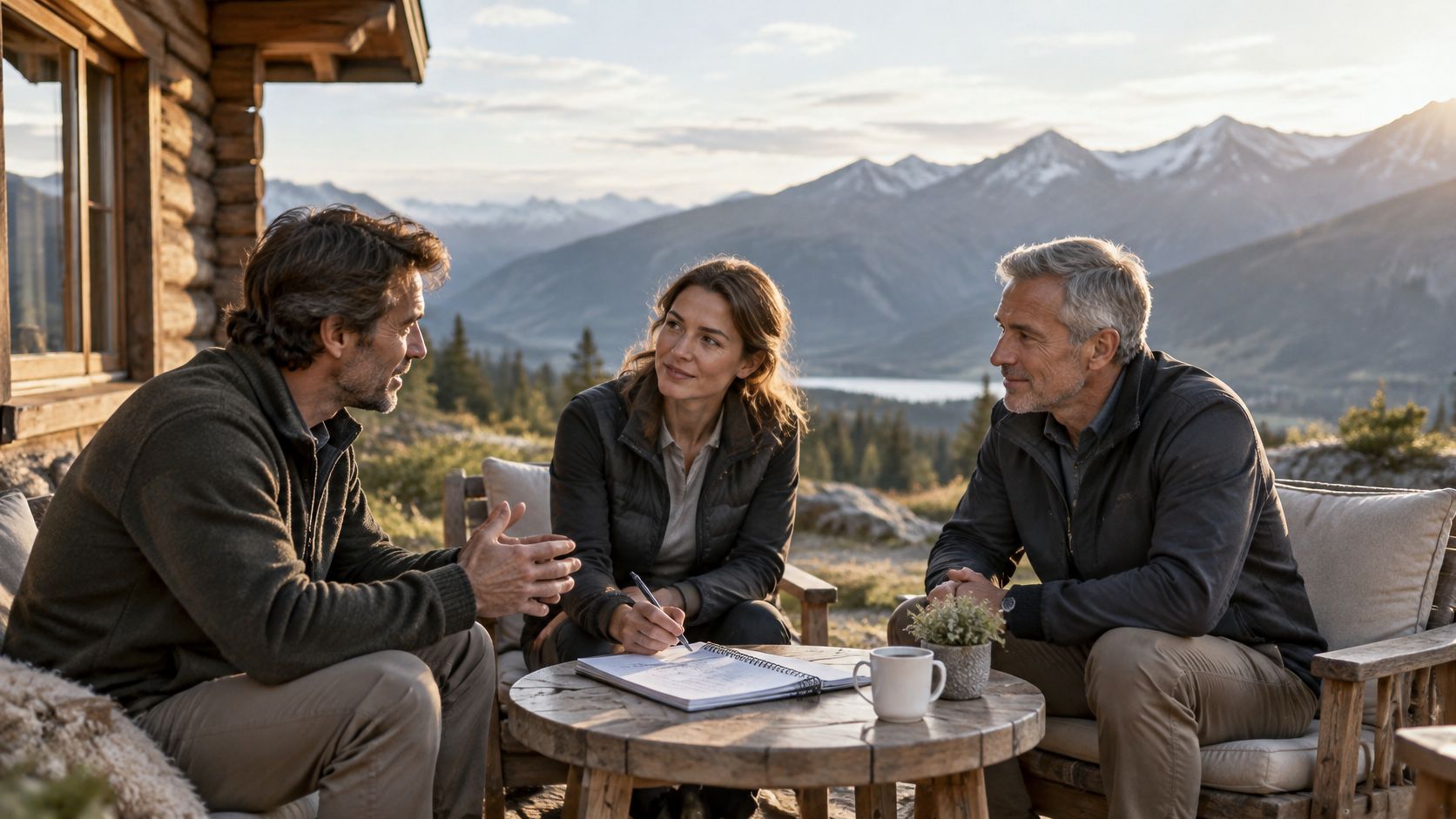
A leadership group can use a central gathering space for shared discussion, then move into smaller conversations outdoors or in suitable reserved spaces. Don't assume an occupied cabin is available for meetings, or that an outdoor discussion is private enough for confidential matters.
Separate Exploration From Decisions
Say a board and staff leadership team need to agree on their priorities. Begin by identifying the trade-offs, give smaller groups distinct questions to examine, and reconvene to decide what the organization will pursue and what it will stop doing.
Record decisions as they happen. Assign a note taker, circulate background material before arrival, and establish when devices are needed rather than imposing an impractical blanket ban.
Measurement should begin before the gathering. A Moniker survey of remote employees found that 60% believed in-person retreats increased engagement, but an employee perception isn't proof that a particular planning retreat improved business performance.
Use a short baseline survey about role clarity, trust, and cross-team communication, then repeat the same questions after people return. Pair those responses with observable follow-through: decisions implemented, owners taking action, and unresolved issues brought back for review.
Decision test: If nobody can name the owner or explain the next action, the discussion hasn't produced a usable commitment.
Close before departure with a written action list and an agreed follow-up meeting. The mountain setting provides distance from daily interruptions; leaders still have to make and carry out the decisions.
6. Memorial and Remembrance Gathering
A colleague brings a photograph. Someone else brings a short passage the person loved, while others arrive without knowing whether they'll want to speak.
A remembrance gathering for a colleague or founder needs room for all of those responses. Participation should never depend on speaking publicly, and the program shouldn't turn grief into a team-building exercise.
At our property, mountain views, gathering spaces, and quieter outdoor areas allow organizers to consider both a shared program and time apart. Our guide to memorial service venues in New Mexico offers further context for planning a gathering with care.
Let Those Closest Guide the Format
Consult the family or close colleagues before deciding on readings, music, photographs, or invitations. Clarify whether the gathering is private, whether photographs may be taken, and who will welcome attendees.
A simple afternoon could include an arrival period, shared stories, a short reading, and refreshments. An optional walk afterward gives people another way to spend time together, provided the route suits attendees and the weather.
- Offer quiet participation. Provide a book for messages or a place to leave written memories.
- Plan comfortable arrivals. Coordinate transportation, seating, and meals with mobility and dietary needs in mind.
- Avoid unexpected obligations. Tell attendees what the program involves and make speaking optional.
- Confirm lighting arrangements. If candles are meaningful, discuss applicable restrictions and consider flameless alternatives.
Keep printed materials simple and give the host permission to shorten the program if that feels appropriate. Some people may want conversation afterward; others may prefer to return to their cabin.
For this format, success isn't a polished event or a measurable change in morale. It's a gathering that respects the person being remembered and the people who came.
7. Stargazing and Evening Circle
After dinner, the group moves outside with warm drinks. Laptops stay behind, and the host offers a simple invitation: share something from the retreat that you'd like to carry back into ordinary work.
An evening circle can be a complete gathering or a gentle close to a planning or creative retreat. Under open high-desert skies, it gives colleagues a shared experience without requiring competition, athletic ability, or elaborate equipment.
Clear skies aren't guaranteed, and neither is comfortable outdoor weather. Plan the evening around conditions, with an indoor alternative that preserves the conversation even if stargazing isn't possible.
Keep the Invitation Light
A team might begin with a short poem, leave time for conversation, and finish with an alcohol-free toast. Another group might prefer quiet sky-watching with no speaking prompt at all.
- Communicate the plan. Explain where to meet, what to wear, and that attendance is voluntary.
- Arrange comfort. Plan suitable seating, blankets, and warm drinks rather than assuming they're provided.
- Check outdoor requirements. Confirm lighting, safe routes, quiet expectations, and any fire restrictions.
- Choose a backup. Identify a suitable indoor space before the evening begins.
A fire isn't necessary for an evening circle. Never build the program around one without confirming permission and current conditions.
Keep paths visible and avoid asking people to cross unfamiliar ground in darkness. Anyone who prefers to remain indoors should still have a comfortable way to participate in the social part of the evening.
Resist the urge to turn every reflection into a public commitment. Sometimes the appropriate ending is a shared moment, followed by enough time to sleep before departure.
8. Farm Day and Harvest Gathering
A team pauses beside the goji plants while a host explains what's happening on the farm that season. Later, colleagues sit down to lunch with something concrete to talk about beyond their usual work.
A farm-centered gathering works best when it respects the actual needs of the land, rather than treating agricultural work as a staged attraction. Our goji farm, gardens, and farm animals are part of the property's character, but specific tours, demonstrations, or hands-on activities must be confirmed before they appear on an itinerary.
Follow the Season, Not a Fixed Script
A late-summer gathering might take a harvest theme if conditions and available activities support it. At another time of year, a garden walk, an observation exercise, or a conversation about seasonal work may be more appropriate.
For example, an operations team could arrange a guided farm discussion, then gather to compare what they noticed about timing, maintenance, and shared responsibility. Keep that conversation grounded in what the group learned, rather than forcing a business lesson onto every plant.
- Confirm participation. Establish which areas and activities are available to guests.
- Offer an alternative. Include a seated or observational option for anyone who can't take part physically.
- Dress practically. Recommend walking shoes, layers, and sun protection for uneven ground and changing conditions.
- Respect farm guidance. Don't pick crops, feed animals, or enter working areas without permission.
A shared meal can complement the day, but don't promise farm-grown ingredients or a particular menu without confirmed arrangements. Observation can be as worthwhile as hands-on work.
For a closer look at the setting, view the property video.
How the Eight Retreat Formats Compare
| Item | Best For | Lodging and Gathering | Setting |
|---|---|---|---|
| Corporate Offsite on a Working Farm | Teams seeking focused work and time together away from the office | Cabins, casitas, gathering spaces, and outdoor areas on one property | Quiet historic farm in the mountains, 11 miles north of Taos |
| Writing and Creative Retreat Weekend | Writers, artists, and teams developing creative projects | Historic cabins for private work, plus shared gathering spaces | Northern New Mexico landscape with a creative heritage |
| Yoga and Wellness Retreat for Teams | Teams seeking rest, reflection, and optional wellness activities | Cabins and casitas for rest, with outdoor space for movement | High-desert farm with mountain views, gardens, and open air |
| Family Reunion and Multigenerational Gathering | Families seeking shared activities and space for different generations | Cabins and casitas, a barn, and outdoor gathering areas | Farm setting with gardens, animals, and open land |
| Leadership Planning Retreat with Breakout Spaces | Leaders focused on strategy, alignment, and decision making | Central gathering space, cabins and casitas for breakouts, and outdoor areas | Quiet rural mountain property away from the office |
| Memorial and Remembrance Gathering | Teams or families seeking a quiet, reflective place to remember someone | Gathering space, outdoor areas, and private cabins | Contemplative setting with mountain views and natural light |
| Stargazing and Evening Circle | Groups seeking informal evening connection and reflection | Outdoor gathering areas, with cabins and casitas nearby | Rural high desert with open skies and mountain horizon views |
| Farm Day and Harvest Gathering | Teams seeking hands-on or educational farm experiences | Outdoor space for shared meals and conversation | Working goji farm with gardens, animals, and seasonal activities |
Choosing the Format That Fits Your Team
Start with the conversation your group needs to have. If colleagues need to resolve a shared operational problem, choose a working offsite; if leaders need to make consequential decisions, choose a planning retreat with protected discussion time and a written record.
A creative weekend suits a team that needs to produce something, not merely talk about being more imaginative. A wellness format suits a group that needs a lighter pace, provided leadership also addresses the conditions that made rest necessary.
Compare the Purpose and the Practical Demands
Compare a small shortlist before committing. Consider what each format asks of participants physically, socially, and emotionally, as well as what it requires from the setting.
- For planning, prioritize suitable working space, preparation, facilitation, and follow-through.
- For recovery, protect free time and make movement and social activities optional.
- For connection, use shared meals, creative work, or an evening circle without requiring personal disclosure.
- For remembrance, let the wishes of family and close colleagues guide the program.
Ask attendees privately about dietary needs, mobility, sleeping arrangements, caregiving responsibilities, and travel constraints. Don't assume that enthusiasm for the retreat means everyone can manage the same activities or absorb incidental costs.
For groups traveling from Santa Fe, Albuquerque, elsewhere in the Southwest, or neighboring states, review the full journey to San Cristobal. Arrival timing, ground transportation, weather contingencies, and the return trip deserve the same attention as the retreat program.
Choose a Season You Can Plan Around
A farm-based retreat should reflect the conditions of the visit. Outdoor work, garden gatherings, and evening circles need weather alternatives; colder-season stays may place more emphasis on cabin time and indoor discussion.
Choose one primary format and add complementary activities sparingly. A planning retreat can include a quiet evening outdoors without becoming an entirely separate wellness, creative, and harvest program.
Finally, decide what you'll revisit afterward. For a working retreat, that might mean reviewing commitments and asking whether collaboration has changed; for a restorative gathering, it may mean an honest discussion about workload rather than a satisfaction score alone.
Taos Goji welcomes inquiries about retreats, events, and stays. Reach out to discuss dates, lodging, the spaces you're considering, and the gathering you have in mind, so the practical arrangements support its purpose.
Our historic cabins, casitas, gathering spaces, and working high-desert farm offer a setting for focused work, creative time, and meaningful gatherings. Visit Taos Goji to explore the property and inquire about dates, accommodations, and a retreat format that fits your group.